by Crystal Caudill | Nov 18, 2025 | Author Interviews
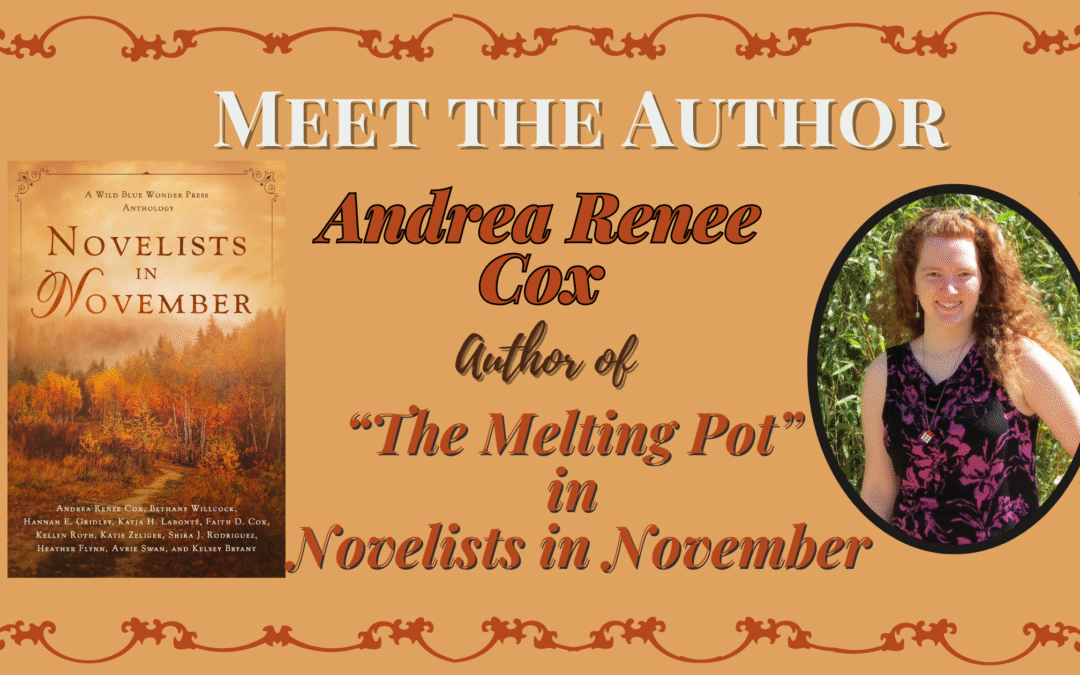
I have had the blessing of having Andrea edit each of the books in my newest series, The Art of Love and Danger. We’re celebrating the one-year release of her novella collection, Novelists in November, on November 19th. Andrea is generously giving away one print copy of Novelists in November to a U.S. resident. You can find all the information at the end of this post. If you’re in need of an editor, I recommend checking out Andrea at her website below. Before we dive into the interview, let me give you the basic introduction!

Texan author Andrea Renee Cox is a born-again child of God who enjoys writing stories that inspire, copyediting fiction manuscripts, tutoring middle school students, and going on road trips with her family. Whether she’s working on historical, contemporary, women’s fiction, romance, or romantic tragedy, she uses her skills in research and writing techniques—as well as guidance from God—to produce the best story of her ability every time. Her books may be found on her website andreareneecox.com, and readers are welcome to follow her blog and subscribe to her newsletter for the latest updates in her journey.
You can connect with her through: Website | Newsletter | X | Pinterest | GoodReads | BookBub | Amazon
Now for the fun stuff! I have to admit I am partial to my Fast Five. 🙂 So settle in as I hit Andrea with rapid-fire.

CC: Rain or snow?
Andrea: Tough choice! Right now, it’s autumn, so I’ll go with rain. The sound and smell of it have long been favorites of mine. I love a good rainstorm in autumn when the air conditioning is off and the door is open (I have an awning over my porch that usually keeps the rain from coming in, unless the wind blows from the north). That is the perfect writing conditions for me, to have that fresh rainy smell and the pitter-patter on the roof while I’m penning the stories God places in my heart.
CC: Makeup or no makeup?
Andrea: No makeup. I love embracing the face God gave me.
CC: Personal maid or personal chef?
Andrea: I hope that personal chef works well with my food allergies!
CC: Arrive early, just on time, or late?
Andrea: Definitely early. It might seem like a little thing, but it shows how much I care about the other person’s time.
CC: Food fight or water balloon fight?
Andrea: Water balloon. I had lots of fun with those as a kid! Plus I live in north Texas, where summers are HOT. Water balloons are an excellent way to cool off for a while.
That kind of rain sounds amazing. I don’t often get to enjoy it on that level.
What kind of stories are your favorite to write?
Andrea: Emotional ones. I’ve always been an emotional consumer of movies and books and music, and that carried over into my writing. My very first screenplay, which would need a complete overhaul before I let it loose on the world, had me in tears at 16… and my most recently finished full-length manuscript had me weeping buckets by the end. It’s a romantic tragedy, so I was fully anticipating that outcome. So happy it happened! Now I have the challenge of revising and shaping up the stories in the hopes that my readers will also cry uncontrollably through the climax and finale of that story.
CC: Oh dear, maybe you should give tissues out with your book!!
Do you read fiction while you are writing your own stories?
Andrea: Absolutely! I’ve been reading fiction since before I can remember, and I can’t imagine stopping for any lengthy period of time. I generally try to avoid books that are in the same genre as my current work-in-progress (WIP), though. For example, I’m currently writing a contemporary beach read, so I’m reading a romantic suspense.
CC: That sounds like a good practice! My goal is to read more next year.
What is your favorite part about writing? Your least?
Andrea: My favorite part of writing is the creativity. God has given me a gift for story, and I love exploring the various facets of it. Each story brings its own energy and themes and characters, and it’s my job to discover how those elements (and more!) fit together to become a story worth telling.
My least favorite part of writing is receiving critique. It’s not in my nature to take negative things well, so I have to work extra hard at this aspect of writing. One thing I try to keep in the forefront of my mind when reading through critique is that the feedback is intended to improve the story in some fashion. That doesn’t mean I’m never going to cry over the negative feedback; I most certainly will! Emotional consumer of media, remember? But it makes me cherish even more the positive feedback and the polished story once it’s completed.
CC: It’s always hard to receive critiques, but it does help to make a story all the better. I love how this has shaped you as an editor to be so encouraging as your edit.
Do you have a general writing process you follow or does it change all the time?
Andrea: My process has shifted wildly over the years, and each story seems to demand its very own process.
My current WIP (the beachy novel) surprised me. I actually worked up a chapter-by-chapter outline with notes on the goal for each chapter beneath the blurb of what’s supposed to happen in it. That outline has been incredibly helpful in churning out the pages of this first draft because it’s kept me focused and creative all at once. Back when I was a pantser, I thought outlining would rob me of creativity. Just this year, I realized why I’ve actually been thriving with outlines on the last several projects. I grew up on them from umbrella pages in second grade to book reports in middle school and research papers in high school. Outlines are now something I embrace as part of my process, and my creativity flourishes because of them.
Helpful tip: Outlines can be adjusted if a bunny trail leads to a whole new plot. Just remember to go back to make sure the beginning (or however much you’ve already written before the bunny trail adjustment) still fits or if it needs tweaking.
CC: I love bunny trails, but boy, do they add to the editing.
How have you seen Good in your writing journey?
Andrea: There are not enough words to express all the ways God’s been working in my writing journey!
One time, I lost an entire tote bag full of research for a particular project. After scurrying about and searching through tears everywhere I could think, I stopped and gave it to God. Not only did I pray about it but I also wrote out that prayer and hung it on my bedroom wall. I wanted to be able to pause and meditate on the prayer and keep giving that project to God. The research was so crucial, and I couldn’t move forward on the project without it. God had better ideas than my pausing to meditate and pray over it again and again. Within ten minutes of my hanging that prayer on my wall and giving the situation to God, He whispered into my soul exactly where I could find my research–in the one place I hadn’t thought to look, of course! That prayer and the added answer still hangs on my wall above my light switch as a reminder that God cares about the details–all the details–of my career and life. Any time I’m struggling, I can reread that prayer and answer and see the miracles God has done for me.
There are so many moments like that throughout my writing journey so far. Every time, I find myself in awe of God all over again. He’s truly amazing.
CC: That is so beautiful. I really love seeing how God works in others’ lives.
Why do you write Christian Fiction?
Andrea: I write Christian fiction because God called me to it. “Trust and Obey” is one of my favorite hymns for a reason, and that phrase has become a mantra to me, something I use to remind myself why I do what I do, whether that’s in writing or in life. With all my heart, I want to trust and obey my Heavenly Father. I want to be found in His will each and every day of my life, and my writing is a part of that. It’s such a beautifully exquisite gift He’s given me, to be tasked with writing stories that honor Him and entertain readers at the same time. I cherish even the difficult moments of this journey because it is all for His glory.
CC: Amen and Amen.
Do you have any advice for those who want to write their own stories?
Andrea: Lots! Way too much to list it all here, but I’ll give you my top three tips.
1. Be as historically accurate as you can.
If dates, names, lineages, events, etc. can be proven, stick with them! Work your story’s plot around the history–do not rework history to fit your plot. History was there first; let’s respect that. Why am I such a stickler for this? One, because truth matters. Two, because from everything I hear from readers (in person, in online reader/writer groups, and on Goodreads [in groups and in plenty of reviews]), historical accuracy is a huge pet peeve for a LOT of readers these days. Spare yourself some one-star rants and just do the job accurately in the first place.
2. Pray your way through it.
God gave you this gift of writing. He can certainly help you through any sticky spots that come up along the way.
3. Study the craft of writing before you publish.
There are a ton of books out there that make their authors look like amateurs because they didn’t spend the time to study the craft that’s been established for hundreds of years before they hit Publish and sent their books to readers. Please don’t be one of those people. Study writing craft books, study traditionally published novels (in your own genre as well as others), and study movies and TV shows. So much can be learned from those who’ve walked this writerly journey before us. If we ignore that, we miss out on a plethora of resources that can help make our stories better.
If you have any questions about writing and would like some free tips, send me a message through the Contact page on my website: https://andreareneecox.com/contact
CC: Fantastic advice!
If someone has never read your books before, where should they start?
Springtime in Surrey (my story: “The Cottage on the Hill”) and Novelists in November (my story: “Melting-Pot Thanksgiving”) are both excellent places to begin.
“The Cottage on the Hill” features a former ballerina who cries into her tea every afternoon and a sheep farmer neighbor who wonders why… and what he can do to cheer her up.
“Melting-Pot Thanksgiving” features an imperfect daughter tasked with creating the perfect Thanksgiving while balancing a tight writing deadline and helping her foster kids through difficult life events.
Helpful tip: You might want to have tissues close at hand for both of these stories. Cottage is a sweet romance, and MPT is women’s fiction. But I write emotional. My writing friends (who get little snippets of my writing while I’m drafting) often joke that I should sell my books with an included package of tissues. I’m just waiting on that tissue sponsorship…
Second helpful tip: Don’t let helpful tip #1 scare you off. My stories are full of heart and hope and the struggle through hard moments. Naturally, I highly recommend them, but readers of the books have too. Check out some reviews on Goodreads or Amazon to see what your fellow readers have been saying about them.
CC: Pass the tissues please!
Now I’m excited to talk about Novelists in November.
Purchase your copy at Amazon
CC: What will fans of Novelists in November love about your story and characters?
Andrea: There are so many things to love about “Melting-Pot Thanksgiving” (in Novelists in November). Some subgenres of MPT include foster family, generational, holiday, dysfunctional family, sibling relationships, best friends, found family, cultural (including cultural foods!), books about books, writers/novelists…
Personally, I find a new favorite thing about the story every time I read it. Don’t you just love when stories sink deeper and deeper into your bones during each reread? One thing I’ve especially cherished is how Sarah, the leading lady, supports her foster children even though they come from very different backgrounds from her own. She creates in her home a safe place for them to grow and discover who they want to be while she also encourages them to aim higher than they thought possible.
CC: The stories that sink deeper the more you read them are some of my favorites.
How did this story develop and change from spark to finished book?
Andrea: Goodness! There’s definitely a story here. 😉
I was coming off of writing “The Cottage on the Hill” (in Springtime in Surrey), which is my most romantic story to date. That one gave me the biggest book hangover, it was so good when I finally earned that final chapter!
So “Melting-Pot Thanksgiving” struggled to get off the ground at first. I went through seven or eight different novelists ideas before landing on MPT’s premise of a foster mom with a diverse household and a picky mother who needed help creating Thanksgiving this year. Once God gave me that idea, He also helped me create a bullet-point outline.
But when I began the first draft, it came out so flat and toneless. It had no voice! I stopped about halfway through and prayed for guidance: Should I go back and rewrite what I’ve already written, should I trash the draft and start over, or should I finish the draft and then trash it and start over? Those were the only three options I felt would work for such a lifeless story.
Thankfully, God shared His wisdom with me within seconds that time. He instructed me to finish out the draft and then move forward.
So I did just that. I finished out the draft and closed it out, never to be looked at again, I hope! I opened a brand-new document and reread my outline (because that was still solid). Then I began writing–from scratch–draft two.
Within the first paragraph, I knew I had found the voice for this story.
Praise the Lord for His goodness and wonderful guidance! I’m still praising Him today because of His goodness to me through the making of MPT.
The story went through twelve drafts, and I’m quite happy with the results. In fact, one reader just told me in a comment on my blog that she’s made MPT a part of her Thanksgiving traditions (she’s Canadian, so she celebrates in October). That’s a gift from God right there, especially with how utterly flat and voiceless the story was in that first draft. The story came a long way from there, for sure!
CC: The progression and how God worked is wonderful to get a peek into. Writing is a journey, that is for sure!
What is a fun fact about this story that readers might not know?
Andrea: The way Sarah Jones shoves up her sweater sleeves when she writes is one of my own quirks. I absolutely loved adding that tidbit of my personality into her character. I get a nice aww! moment out of that each time I read it.
CC: I love sticking in some quirks from myself and my friends.
Who was your favorite character to write?
Andrea: I loved all the characters for very different reasons–even prickly Mama, although she broke my heart in certain scenes. Those weren’t always easy to work on because she’s so hard on Sarah sometimes.
The dynamics between Sarah and her brother, Brian, were such fun to write. That refrigerator scene showed me that both characters had plenty of personality and could each hold their own.
I also loved writing DJ and Eun-Ji (pronounced Un-Jee), the foster siblings in the story. He was a tough kid while she was more innocent. That contrast led to some interesting moments that had me giggling and crying–sometimes in the same scene!
The push-pull dynamic between Mama and Sarah was the most challenging to get right. That didn’t mean I didn’t enjoy it–I love the journey to finding just the right touch in those sorts of scenes. But it was definitely the most difficult aspect of this story for me (once I got past the first-draft flatness).
CC: Our characters do grow on us.
How did this story affect you as you wrote it?
Andrea: MPT sent me on a roller coaster of emotion. Everything from tears and laughter to frustration and joy was involved. I loved every second of it! (After that flat first draft; that wasn’t so fun.)
I’m actually one of those weirdos who doesn’t often get life lessons from my writing. God teaches me in my daily life and then He guides me to the right lessons for my characters to learn. So it’s generally my characters who are doing the learning in my writing.
For “Melting-Pot Thanksgiving,” Sarah struggled to find common ground with her mother. They loved each other; there was never any real doubt over that; but they struggled to see things from each other’s perspective. I think that lesson was also well mirrored in how the foster siblings supported each other but still didn’t always see things the same way.
CC: I love how the daily lessons work their way over to your stories.
What do you hope readers will take away from your story?
Andrea: I hope readers of “Melting-Pot Thanksgiving” will enjoy the journey that Sarah, DJ, and Eun-Ji experience. There is so much to be gleaned from this story, but one thing that stands out to me is that no matter what background people have, no matter how different they are from one another, there are commonalities that they share. I hope this story brings people closer to their family, friends, neighbors, and even strangers as they learn to see each other through eyes of compassion and grace.
CC: In a world where we like to tear each other apart, this is a wonderful take away.
I always like to end with a fun question so . . .
You are in the back of a police car on your way to jail. What did you do, and is anyone with you?
Andrea: If I were in the back of a police car, it would have to be because I broke into the library to write among the books. I’ve always had a secret dream of being in the library after hours–not a clue where that dream came from!–and I’m sure that’s about the extent of trouble I’d get into. Super harmless, Officer, I promise! Just sitting here typing away in hopes that my next novel will join the ranks of the books surrounding me.
Speaking of libraries, if you have a chance, would you ask your local library to add Springtime in Surrey and Novelists in November to their collections? Between the two books, there are 19 different stories to be enjoyed (8 in Surrey and 11 in Novelists).
Crystal, thank you so much for having me on your blog today! I hope your readers and you enjoyed the introduction to “Melting-Pot Thanksgiving,” which is published in Novelists in November. It turns one year old this month! November 19 is the big day. I’ll be rereading MPT that day to celebrate.
CC: It was a belssing to have you and I’m looking forward to reading it this Thanksgiving!
Readers, I hope you’ll check out Novelists in November and then leave a review on Amazon, Goodreads, and/or BookBub. You wouldn’t believe how important that is to an author.
Reader, what are your Thanksgiving traditions?
Giveaway
Update: Sara M. Winner has been emailed.
Here’s your chance to win a copy of either Novelists in November. Comment on the blog and fill out the form below for your chance to win! Entries close at 11:59 p.m. EST on 11/25/2025. Open to legal U.S. residents only. See Giveaway Policies for more details.
by Crystal Caudill | Aug 19, 2025 | Author Interviews
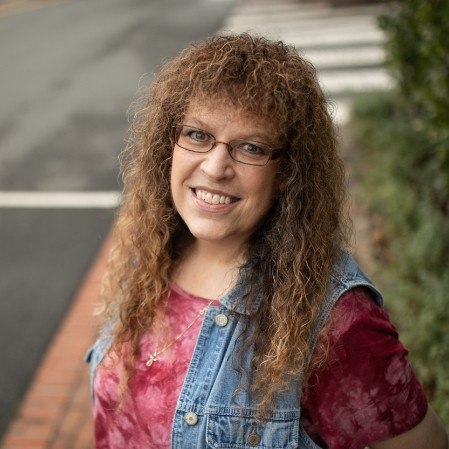
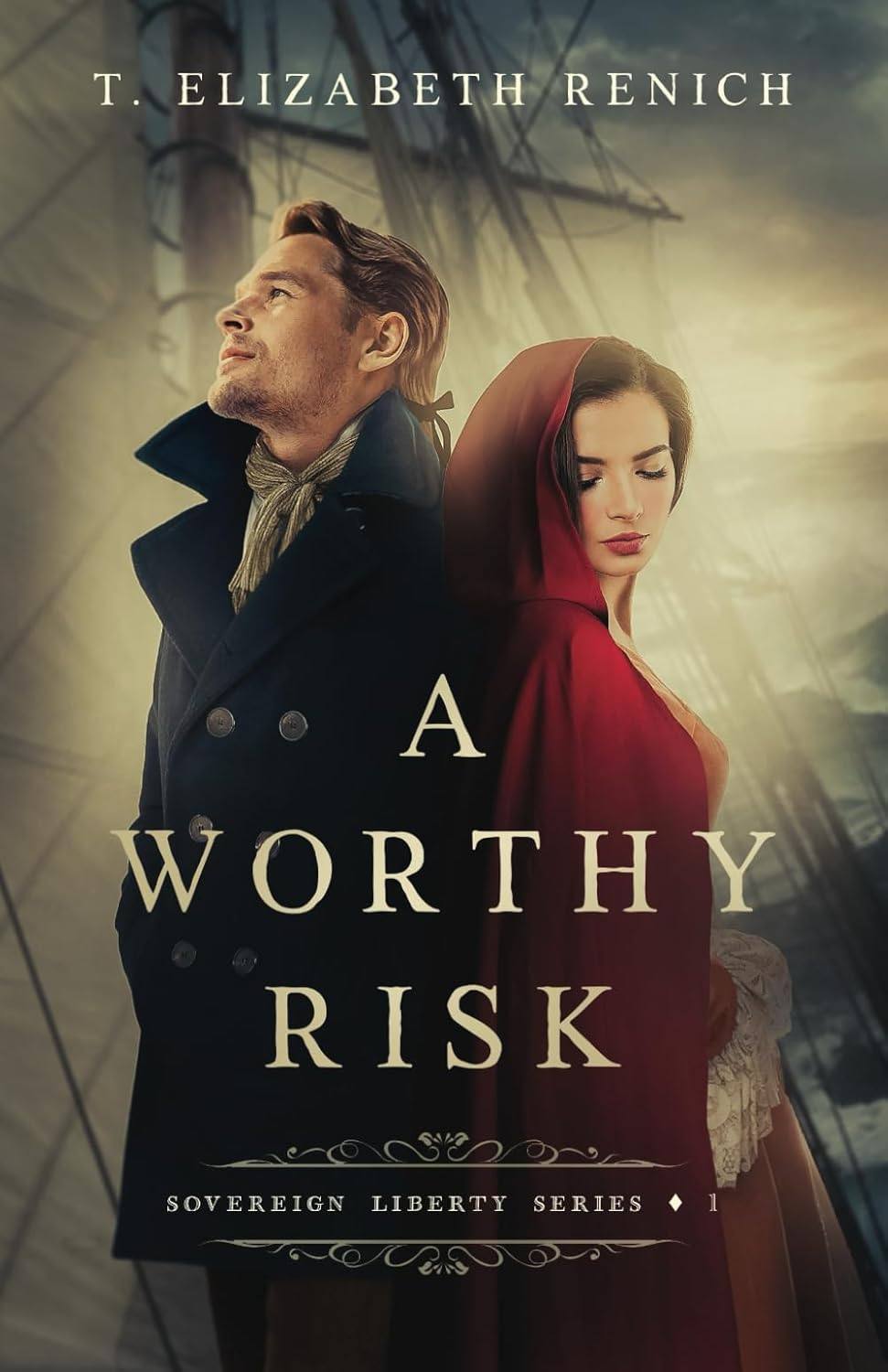
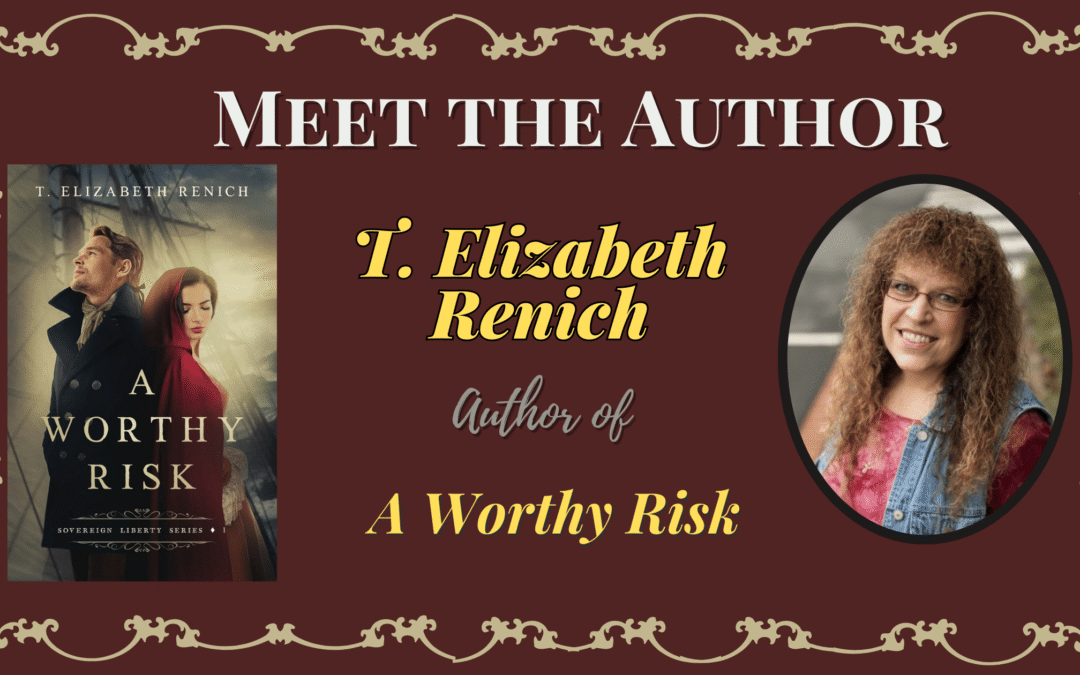
I’ve had the blessing of knowing T. Elizabeth Renich for several years now–or maybe it’s more. Time is slipping by faster than I want to admit. Either way, It’s been a blessing to get to know T.E. who wrote a fantastic Civil War series called the Shadow Creek Chronicles, and now she has jumped periods and is working on an intriguing Revolutionary War series, the Sovereign Liberty Series,. The first book, A Worthy Risk, is already out and ready for you to dive into. T.E. is graciously giving away a print copy to one U.S. Resident. Check out the end of this post for the details on how to have your chance. Before we go much deeper, allow me to give you a proper introduction to T.Elizabeth Renich.
 T. Elizabeth Renich has written five historical novels, worked for two NFL teams, and visited all fifty United States of America. International travels have found her in Germany, Japan, Ireland, Israel, Scotland, and England. She hunts historical markers and shares hope as an ovarian cancer survivor. Her love of photography is evident as she documents research trips and life, giving glory to God for the great things He has done.
You can connect with her through: Website | Facebook | Instagram | Gorgeous Georgians Facebook Group hosted with Laura Frantz
Now for the fun stuff! I have to admit I am partial to my Fast Five. 🙂 So settle in as I hit T. E. with rapid-fire.
CC: Rain or snow?
TE: Snow
CC: Makeup or no makeup?
TE: Makeup
CC: Personal maid or personal chef?
TE: Personal maid
CC: Arrive early, just on time, or late?
TE: Arrive early
CC: Food fight or water balloon fight?
TE: Water balloon fight
You people who arrive early never cease to amaze me. LOL So let’s dive into the nitty gritty.
What kind of stories are your favorite to write?
TE: Historical – because I have some readers who grew up not liking history and I’ve been able to change their minds… learning can be fun, and setting fiction in historical places helps dates and places come alive.
CC: It’s always broken my heart that so many history teachers have done a disservice to the next generation. I was blessed to have AMAZING middle school history teachers who brought history to life and inspired a love of history in almost all their students.
Do you read fiction while you are writing your own stories?
TE: Sometimes, if I have time — depends how close the approaching deadline is looming! I have investigated some fiction set in the same time period to see how other authors may have handled similar events — it makes a difference when trying to attain a fresh perspective on a “famous” historical event or being true to the nature of an actual historical person who lived in my time period, based on letters and diaries.
CC: Time is such a limited commodity! And all the research that goes into writing a good story really detracts from what reading time we get. I definitely don’t read as much as I used to, and it’s sad in a way.
What is your favorite part about writing?
TE: Favorite part about writing is the research because it helps shape the story. Least favorite is the research because I get waylaid from writing by far too many rabbit trails…
CC: Ha! Ha! Boy do I feel this one, especially when you’re at a part of a story that you don’t want to write. Research is the perfect legitimate excuse to get no writing done. LOL
Why do you write Christian Fiction?
T.E.: I believe writing Christian fiction is the mission field the LORD has called me to, amid the pages, to reach people I may never get to meet this side of heaven. The words He provides carry impact and influence, to be used wisely and for His glory.
CC: Amen. It’s definitely a challenging ministry to be called to, but what a blessing it is.
If someone has never read any of your books before, where should they start?
T.E.: A Worthy Risk is the first installment of my new Sovereign Liberty Series, so it’s a great place to start. (If readers enjoy that, they can find my Shadowcreek Chronicles series to tide them over until the second in the new series is released ; )
CC: Speaking of A Worthy Risk, let’s dive into talking about it!
Purchase your copy at Amazon
CC: Why did you write A Worthy Risk?
T.E.: I wrote this story because after spending time in Williamsburg, a friend challenged me to “do something” about the history in my own backyard — I live in Virginia — which would make it easy access for research. Williamsburg emphasizes the American Revolution, but I needed to back the story up so that I had an understanding of how the American colonies got to the point of declaring their independence from England. I knew very little about the French & Indian War and had never heard of Fort Michilimackinac. Learning about the years prior to the American Revolution served as a reminder that we were all British until 1776.
CC: How fun that a friend’s dare led you on an adventure in your own backyard. I’m looking forward to seeing what your research has brought up for us.
What is a fun fact readers might not know?
T.E.: In A Worthy Risk, I make mention of the defined boundary between Maryland and Pennsylvania as established by Charles Mason and Jeremiah Dixon in 1767 — but it wasn’t called the Mason-Dixon Line until 1820 when it became known as the divide between northern and southern states, as referenced in my Shadowcreek books.
CC: Oh that’s funny! I love close enough to the Mason-Dixon line that we’ve called it that many many times, but I had no idea that is what it actually referenced (the first part, I knew the second).
How did this story affect you as you wrote it?
T.E.: I had to do a lot of research, and I’m thankful for the provision of time and travel to places where things happened in my story. Being able to see the places first hand helps me see and convey the story to readers better.
CC: That truly is such a blessing. I don’t get to travel much these days, and thus my current series is set in my backyard.
What do you hope readers will take away from your story?
T.E.: I hope readers will learn one thing new to them that they didn’t know (or don’t remember learning in school) that might spark an interest in history.
CC: I love that. Historical fiction really is a blessing in helping others to become interested in history.
I always like to end with a fun question so . . .
You are in the back of a police car on your way to jail. What did you do, and is anyone with you?
T.E.: Maybe parking or flipping a U-Turn where it’s not allowed — to find a historical marker. Whoever is my current research assistant is likely in my passenger seat because they volunteered to ride along — ha!
CC: LOL! Those historical markers are in the most AWFUL places to stop. It’s always so annoying.
Readers, I hope you’ll check out A Worthy Risk and then leave a review on Amazon, Goodreads, and/or BookBub. You wouldn’t believe how important that is to an author.
Reader, what was your childhood history classes like?
Giveaway
Here’s your chance to win a copy of A Worthy Risk. Comment on the blog and enter the Rafflecopter for your chance to win! Entries close at 11:59 p.m. EST on 8/26. Open to legal U.S. residents. See Giveaway Policies for more details.a Rafflecopter giveaway











 Novelists in November is a Christian short story collection featuring eleven emotional tales of authors finding their calling in Christ and pursuing hope, joy, and inspiration. This anthology contains touching stories from contemporary and historical fiction authors with a mix of romance, women’s fiction, and mystery!