

A Brief History of the Secret Service: Part 7 – A Real Case
A Brief History of the Secret Service
“The detection of crime, when entered upon with an honest purpose to discover the haunts of criminals and protect society from their depredations by bringing them to justice, is held to be an honorable calling and worthy of commendation of all good men.”
– Hiram C. Whitley, Chief of the Secret Service, May 1869 – September 1874
Welcome to my series of blog posts revisiting my research on the Secret Service for my Hidden Hearts of the Gilded Age series. For the next few months, I’ll be posting about their history. At the end of each post, I’ll include my resources and links to the other posts. As each post goes live, the links will be updated.
Part 7: A Real Case – Going to Jail to Make a Capture
One of my favorite research resources was the serialized newspaper articles compiled into a book by former Secret Service Chief Andrew. L. Drummond. He was my favorite operative to read, though I read about and from many. Andrew Drummond was smart, innovative, and got the job done. I really admired him and the inside look at how he conducted his cases.
In one of my original versions of Counterfeit Love, Broderick used the following story’s scheme to insert himself into the counterfeit ring. As usual, the story took on a life of its own and lost the details from this case. Since I couldn’t use it in my story, you can read the full riveting tale in Drummond’s own words here: Going to Prison to Make a Capture.
“In the latter part of 1872 a particularly dangerous counterfeit $50 Treasury note was put into circulation. . . . In May 1873, the chief of the secret service ordered me to go to Atlanta, Ga. He said he had nothing tangible to turn over to me for investigation, but a good many of the counterfeit notes had recently appeared in the South, and he wanted me to go down and see what I could find.
I made up my mind I would hang around the resorts frequented by crooks and learn what I could hear. I was dressed shabbily and had no difficulty in mingling with those with whom I came in contact without attracting attention. And gradually, I let it become known I was a burglar. . . . I went to Penora to investigate [Hanford’s] statements. I found that they were all true except the one referring to his respectability. He owned a farm, but he also dealt in counterfeit money. . . .
When I returned to Holly Springs, I laid this information before District Attorney G. Wiley Wells, who later became Minister to China. I asked Mr. Wells to co-operate with me in the execution of a plan I had devised to catch the string of men down through which the counterfeit passed from the makers to Hanford.
“Mr. Wells,” said I, “I believe the information I have obtained about Hanford will be sufficient if he be confronted with it to wring a confession from him. IF so, I would like to be arrested for counterfeiting, put in jail with him, and then both of us permitted to break out together. Immunity can be promised him if he will do what I want him to do.”
“What do you want to be sent to prison and then break jail for?” asked Mr. Wells.
“So that all of the counterfeiters in the country will read about it,” I replied. “They all know Hanford, and if they read that he has broken jail with another counterfeiter, they will be ready to sell me counterfeit money if Hanford introduces me to them. When we get loose, I want him to take me to his friends.”
. . .
A few days later, the District Attorney provided me with a genuine fifty-dollar note, which I wet and rubbed together until it looked like a piece of canton flannel. Then I sauntered into Frank’s story and asked for a paper collar. A clerk handed me what I asked for, and I gave him the rumpled fifty-dollar note, which, by the way, was not only good but was marked with the initials of both the District Attorney and myself.
I shall never forget how the clerk looked at me. It was as if he were saying to himself, “here’s the man who is passing all of this counterfeit money, and now he is trying to do me.” . . . and said he could not change the bill. So I gave back the collar and went out.
But before I had even left the store the cashier had reported the attempted “fraud” to Mr. Frank, and both had gone to the District Attorney’s office to tell him what had happened.
. . .
The United States Marshal at that time was Colonel Pierce, who had also been a Northern army officer during the war. He was known far and wide as a bad man to impose upon. . . . It was this kind of man who was selected to arrest me. . . .
From here on out, I’m going to summarize what happened. If you want to continue to read it in his words, you’ll have to check out the Going to Prison to Make a Capture Google scan of the book.
Those involved concocted a plan for Drummond to be arrested the next day by the U.S. Marshal. Drummond set up his rented room with the necessary evidence to implicate him as a counterfeiter. There was some arrest drama because the Marshal wasn’t aware of who Drummond really was, but Drummond survived unscathed. He was then arrested and sent to the jail at Oxford “owing to the overcrowded conditions” of Holly Springs. This was just a setup because Holly Springs was too strong to break out of, but Oxford was weak.
After six days in jail, he and Hanford made a break and took the train to Louisville, where they were arrested because the local police recognized them as the escapees. Drummond explained to the local chief what he was doing, and they were released under the guise of using a bribe. Drummond and Hanford went straight to Cincinnati, which at the time was a hotbed of counterfeiters, and he was introduced to all the connections necessary. Things went so well that additional Secret Service men were sent from New York to help him, “as it was not desired to arrest one until we could arrest all against whom we could get evidence.” At one point, his cover was almost ruined. Several weeks later, they successfully arrested fifteen counterfeiters. All but one or two were sent to the penitentiary.
With Drummond providing inside information, four other operatives built cases against a large network that served customers in Kentucky, Tennessee, and the Carolinas. Their investigation occupied the summer and fall of 1873, culminating in a sweep that ensnared seventy-two dealers and shovers in October and another twenty in December.
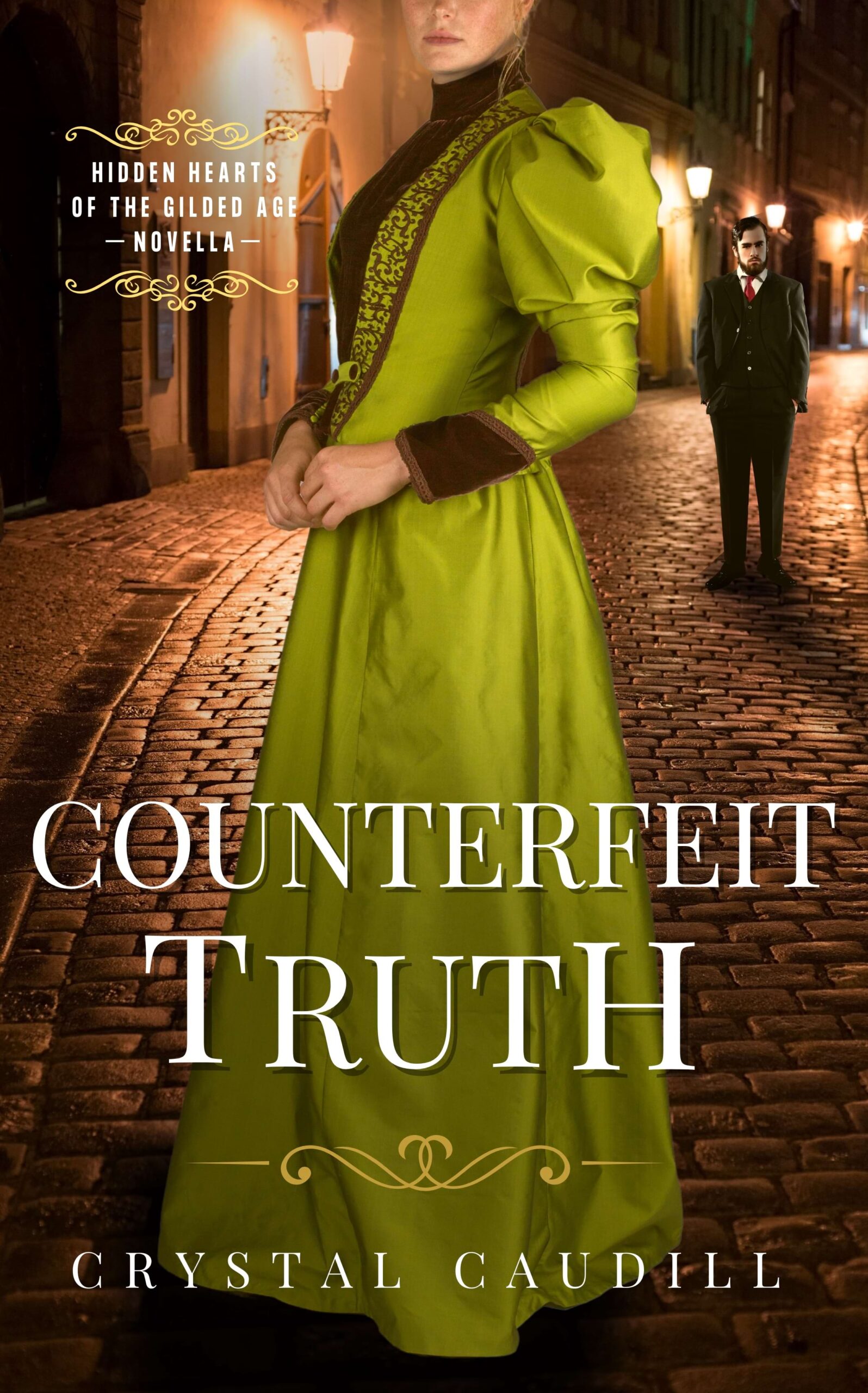
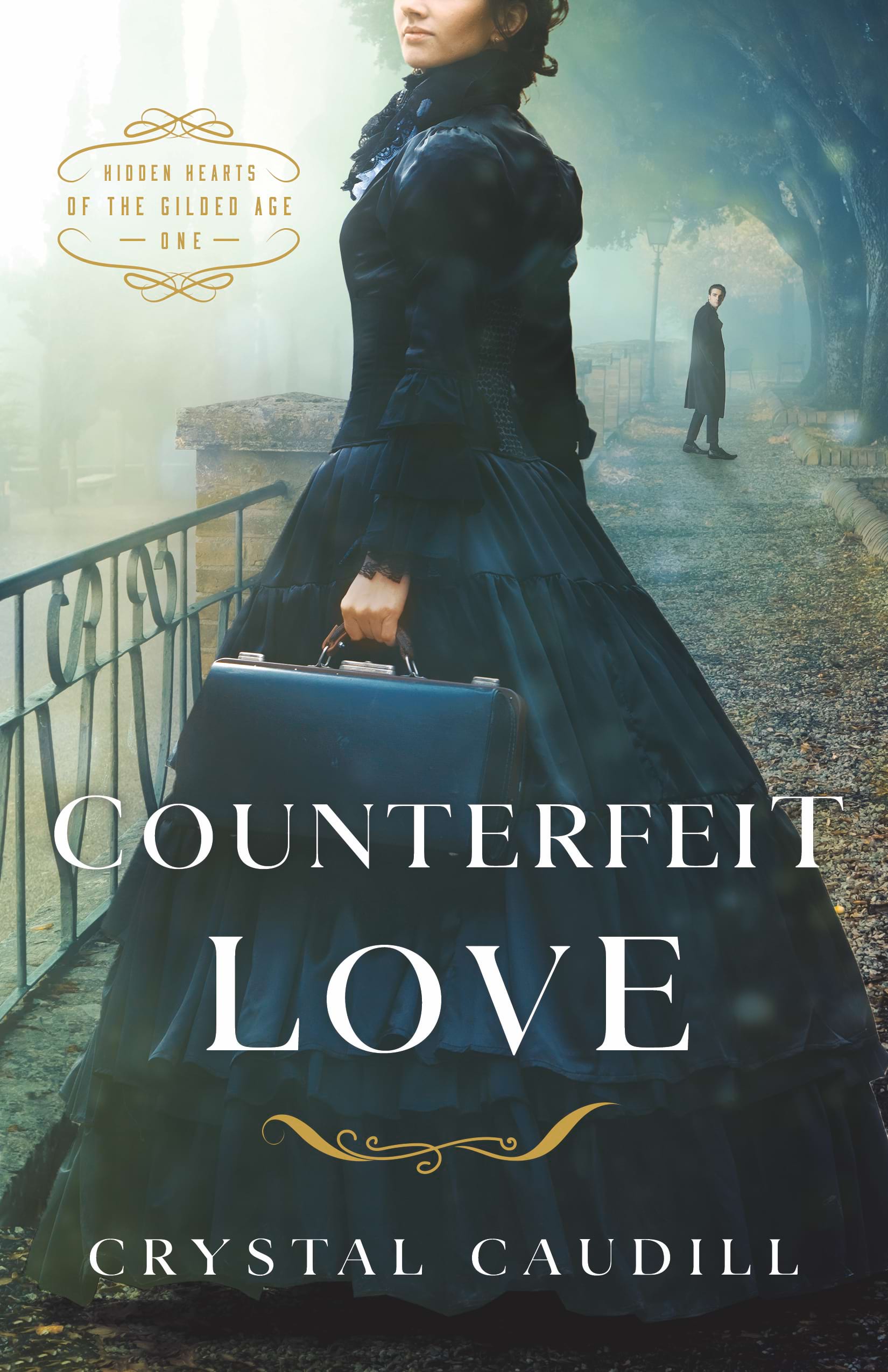
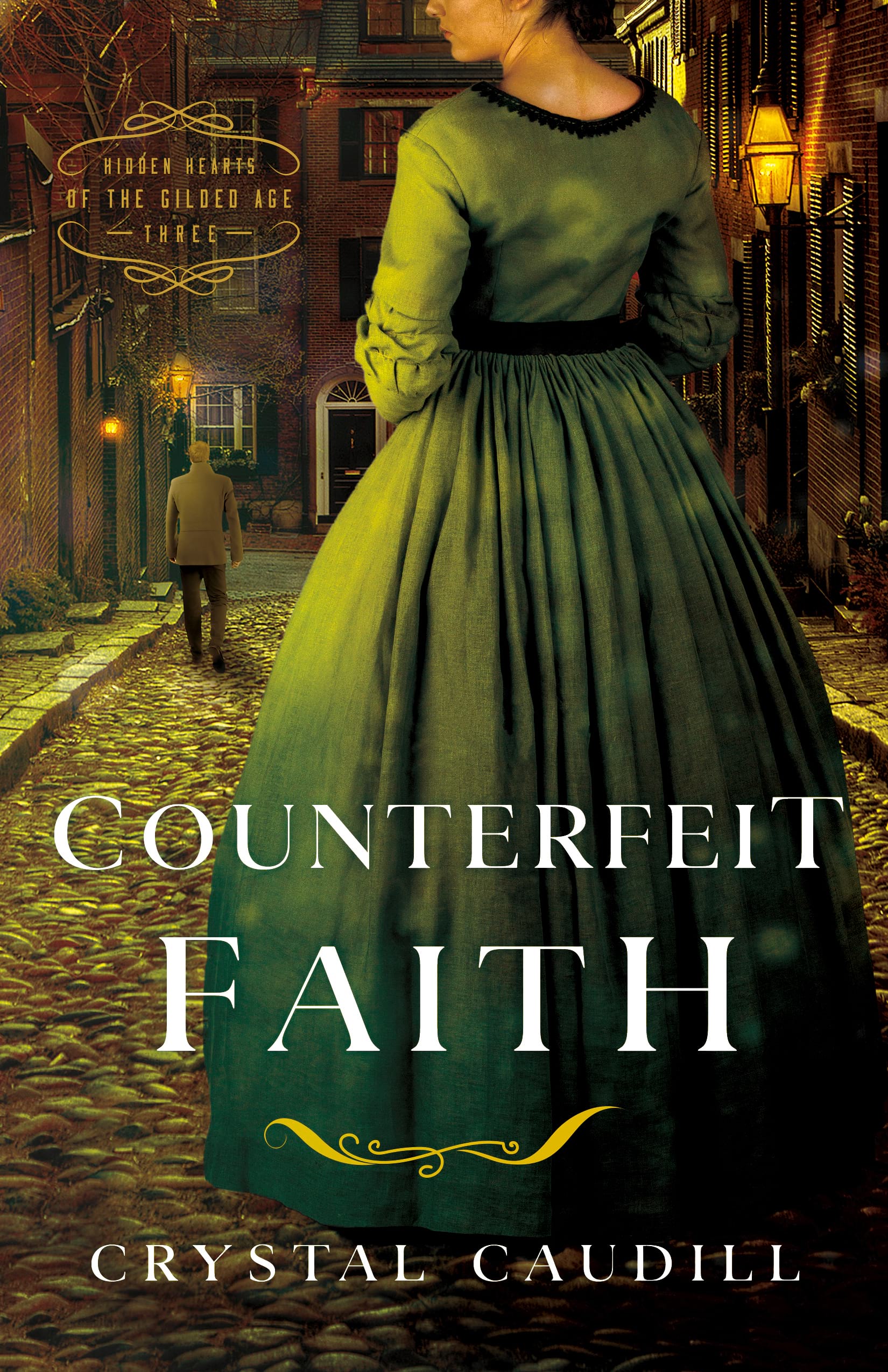
Check out the Hidden Hearts of the Gilded Age Series
Can these four Secret Service Operatives catch the counterfeiters … without losing their hearts?
A Gilded Age Secret Service historical romance series, with mystery and suspense

Resources
While I’m not going to list all the resources I used in research for this story, I will leave you with a few of my favorites in case you want to research further.
Books
Illegal Tender by David R Johnson* (My personal favorite. It gives you a look at counterfeiters AND the Secret Service.)
The United States Secret Service by Walter S. Bowen and Harry Edward Neal
Freedom’s Detective: The Secret Service, the Ku Klux Klan, and the Man Who Masterminded America’s First War on Terror by Charles Lane
True Detective Stories by Andrew L. Drummond (Digital)
Digital Resources

ABOUT CRYSTAL CAUDILL
Crystal Caudill is the author of “dangerously good historical romance.” Her debut novel, Counterfeit Love, was a 2023 Carol Award finalist, and her novella, “Star of Wonder,” won the 2024 Christy Award for short form. She loves history, hot tea, all things bookish, and the Teenage Mutant Ninja Turtles. She is a stay-at-home mom, caregiver, and chaos organizer. When she isn’t writing, Crystal can be found hanging with her family and playing board games at her home outside Cincinnati, Ohio. Find out more at crystalcaudill.com.
Connect with the author:
Website | Newsletter | Facebook | Facebook Group | Instagram | Pinterest | Amazon | BookBub | GoodReads
A Question for You: