A Brief History of the Secret Service: Part 6 – Working Undercover

A Brief History of the Secret Service: Part 6 – Working Undercover

A Brief History of the Secret Service

“The detection of crime, when entered upon with an honest purpose to discover the haunts of criminals and protect society from their depredations by bringing them to justice, is held to be an honorable calling and worthy of commendation of all good men.”

– Hiram C. Whitley, Chief of the Secret Service, May 1869 – September 1874


Welcome to my series of blog posts revisiting my research on the Secret Service for my Hidden Hearts of the Gilded Age series. For the next few months, I’ll be posting about their history. At the end of each post, I’ll include my resources and links to the other posts. As each post goes live, the links will be updated.

Part 6: Working Undercover


“To meet and thwart [crime] requires the most subtle ingenuity, incessant vigilance, and unflagging energy upon the part of officers of the law.” – Herman C. Whitley, Chief of the Secret Service from May 1869 to September 1874


Investigating

Sometimes, before working undercover or while another operative worked undercover, an operative would conduct interviews. Victims would report the passing or “shoving” of counterfeit bills, and, through an interview, describe the alleged criminal.


Once located, another interview would be conducted with the suspect to determine whether the “shover” had knowingly committed the crime. In such situations, the operative had to appear honest and sincere to gain the trust of those he interviewed. He also needed keen observational skills and the ability to recognize a lie when he heard it.


While these investigative skills were great for lower-level criminal activity, they were practically useless for coping with the sophisticated criminals who financed, manufactured, and distributed counterfeit notes. That is where working undercover came into play.


Working within the Criminal Network


To enter a counterfeiting ring, an operative had to conceal his identity and cultivate contacts within the underworld, usually with the help of their informants. By playing a role, he was able to participate in discussions about criminal activities and hopefully induce suspects to commit a crime when and where he could observe them.


Operatives, or their assistants, frequently purchased counterfeit money from underworld criminals, carefully marking the bills with the date of purchase and the purchaser’s initials.


Although observing a transaction was an important objective, it was only a small part of a long-term strategy to identify all the criminals involved with a particular note. Operatives had to ignore minor crimes to build cases against major criminals. Small-time criminals were offered inducements to betray the higher-up criminals.


By spurning immediate arrest, the operative hoped to delve deeper into the counterfeiting ring and develop evidence against each individual. Like the Pinkertons, the Secret Service had a cataloging system for each forger’s name, age, aliases, physical description, dates of arrests and releases, criminal methods, counterfeiting specialties, and a photo of him and/or his cohorts. Ideally, arrests would occur only after all the guilty parties had been identified.


Cases required both investigating and instigating skills.

Check out the Hidden Hearts of the Gilded Age Series

Can these four Secret Service Operatives catch the counterfeiters … without losing their hearts?


A Gilded Age Secret Service historical romance series, with mystery and suspense
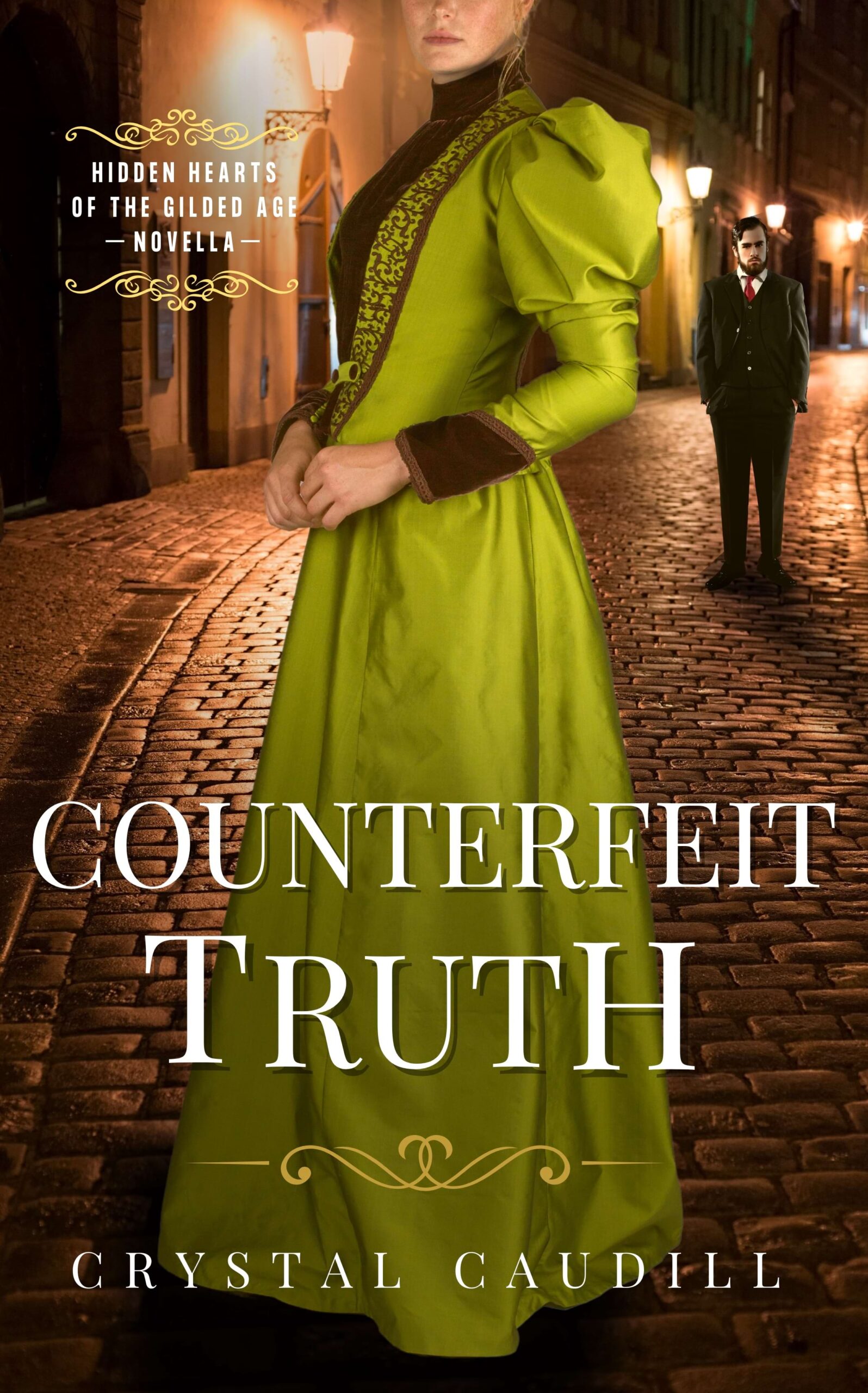
Counterfeit Truth by Crystal Caudill
Counterfeit Love by Crystal Caudill, a Gilded Age romance and mystery
Counterfeit Faith by Crystal Caudill

Resources

While I’m not going to list all the resources I used in research for this story, I will leave you with a few of my favorites in case you want to research further.


Books

Illegal Tender by David R Johnson* (My personal favorite. It gives you a look at counterfeiters AND the Secret Service.)

The United States Secret Service by Walter S. Bowen and Harry Edward Neal

Freedom’s Detective: The Secret Service, the Ku Klux Klan, and the Man Who Masterminded America’s First War on Terror by Charles Lane

True Detective Stories by Andrew L. Drummond (Digital)

 
Excerpts from the History of the United States Secret Service, 1865-1975 by the United States Secret Service (Digital)


Digital Resources


Secret Service Museum Tour (Closed to the Public – video) 
 
The U.S. Secret Service: History and Missions by Shawn Reese Analyst in Emergency Management and Homeland Security Policy


Crystal Caudill, author of Gilded Age historical romance and historical romantic suspense

ABOUT CRYSTAL CAUDILL

Crystal Caudill is the author of “dangerously good historical romance.” Her debut novel, Counterfeit Love, was a 2023 Carol Award finalist, and her novella, “Star of Wonder,” won the 2024 Christy Award for short form. She loves history, hot tea, all things bookish, and the Teenage Mutant Ninja Turtles. She is a stay-at-home mom, caregiver, and chaos organizer. When she isn’t writing, Crystal can be found hanging with her family and playing board games at her home outside Cincinnati, Ohio. Find out more at crystalcaudill.com.

Connect with the author:

Website  |  Newsletter  |  Facebook  |  Facebook Group  |  Instagram  |  Pinterest  |  Amazon  |  BookBub  |  GoodReads

A Question for You:


What was your favorite fact shared today? 

RCR: Treasure Island by Robert Louis Stevenson

RCR: Treasure Island by Robert Louis Stevenson

It’s another month of our Tackle Your TBR Pile reading challenge. So dig through that stack of books you’ve been meaning to read that’s taller than you and start reading!

Don’t forget to comment at the bottom of the post for your chance to win a book off my prize shelf. *The list of prizes from my shelf can be found here.*

Reading Challenge 2026: Tackle the TBR Pile

This Month: August – Classic Book

Next Month: September – Animal on the Cover

I’ve always loved Treasure Island and almost every movie version I’ve seen. Treasure Planet is my favorite and probably always will be. I haven’t read the original story since middle school, and I was SOOOOO hoping I wouldn’t be disappointed when I finally reread it again. Y’all, I was not. There is a reason why Treasure Island is a timeless story. I listened to the audiobook narrated by Michael Page, and it was every bit as engaging as I remembered. You wouldn’t even think the book was written in the 19th century. It felt as exciting and easy to understand as anything written today. I truly adored it and will probably relisten to it every year. I definitely recommend it, especially if you have kids. It would make a wonderful read-aloud, even if you just have Michael Page do the reading. Truly, it was a thrilling read.

I’m thinking about picking up The Little Princess next. That’s one that I’ve seen the movies for (Shirley Temple ALL THE WAY), but I’ve never read the book for. Then I might reread Dracula, North and South by Elizabeth Gaskell, or Rebecca. I do love the classics. 

Treasure Island by Robert Louis Stevenson

Genre: Classic, Pirates

Peg-legged pirates, colorful parrots, and plundered riches – they’re all here in Robert Louis Stevenson’s original seafaring adventure.

When young Jim Hawkins decides to follow a map to buried treasure, he must befriend or outsmart memorable characters such as pirate Long John Silver, captain Billy Bones, and island man Ben Gunn. Mutinous plans, mysterious deaths, and a tangle of double crosses keep Jim guessing all the way to the prize.

Inspired by real-life seafarers, Stevenson captures the adventurous spirit of the times and the imagination of readers, young and old alike. 

Cover or Treasure Island by Robert Louis Stevenson

Giveaway Details – Denise

Here’s your chance to win a book off my prize shelf. Comment with what YOU read for your chance to win! Entries close on 7th of each month. Open to legal U.S. residents and international residents. *International winners will receive a $10 Amazon gift card in lieu of a book from the prize shelf due to shipping costs.* See Giveaway Policies for more details.

A Brief History of the Secret Service: Part 5 Using Informants

A Brief History of the Secret Service: Part 5 Using Informants

A Brief History of the Secret Service

“The detection of crime, when entered upon with an honest purpose to discover the haunts of criminals and protect society from their depredations by bringing them to justice, is held to be an honorable calling and worthy of commendation of all good men.”

– Hiram C. Whitley, Chief of the Secret Service, May 1869 – September 1874


Welcome to my series of blog posts revisiting my research on the Secret Service for my Hidden Hearts of the Gilded Age series. For the next few months, I’ll be posting about their history. At the end of each post, I’ll include my resources and links to the other posts. As each post goes live, the links will be updated.

Part 5: Using Informants


Have you ever been an outsider trying to get into a tight-knit group? Our church has small groups where close-knit relationships develop. While fantastic, being an outsider is initially difficult. You are either joining a new group that takes time to develop trust with, or someone from a tight-knit group invites you in.


Now flip that innocent example on its head and pretend you are a Secret Service operative trying to infiltrate a tight-knit, highly suspicious network of counterfeiters. There is no way you can get in on your own. You are a stranger. They suspect you. They might allow you to have a drink with them, but no vital communication will occur in your presence—unless you have an “in,” someone who can vouch for you.


Enter the informant.


The use of informants was crucial for the success of a Secret Service operative. Thus, an operative’s relationship with his informant was highly personal. They were not friends, but the operative had to know whether they could trust the information, as it dictated their tactics and whether they committed their limited resources to an investigation.


Some informants were voluntary while others were coerced, meaning they were under arrest and possibly facing trial and prison.


Voluntary informants were often self-seeking in their desire to share information. Rewards were given by the Secret Service to any person who gave information “not already in the possession of the chief” that led to the “detection, arrest, and conviction” of counterfeiters or the “capture of their implements and materials.” Counterfeiters offered information as a way to supplement their income when they were down on their luck.


My favorite type of informant was the vengeful one. These informants used the Secret Service to exact revenge on their peers for real or imagined grievances, or to drive competitors out of business. These make the best kind of villain in a story. I read a story that former Chief Andrew Drummond published in the early 1900s about one such Italian counterfeiter. You can read about it here: What Jealousy Did in Little Italy.


A new informant initially had to build a case on his or her own to present his or her results to the operative. Then the Chief of the Secret Service would determine if there should be a reward for their services.


When a rumor was substantiated, the local operative kept the chief informed of developments while simultaneously working with his source to infiltrate the new network. Ideally, the operative sought to identify and arrest all the participants before they could complete and distribute the counterfeited banknotes. However, if it had already entered the distribution network, the chief acted to limit the damage by disrupting the market.


This could be done by providing descriptions of the banknote imperfections to each operative, lawman, and newspaper. Operatives and police officers would spread the word to as many business owners as they could. By spreading the knowledge of the counterfeit to the community, the risk of using the note became too great.


(See links to Resources and previous posts below.)


Check out the Hidden Hearts of the Gilded Age Series

Can these four Secret Service Operatives catch the counterfeiters … without losing their hearts?


A Gilded Age Secret Service historical romance series, with mystery and suspense
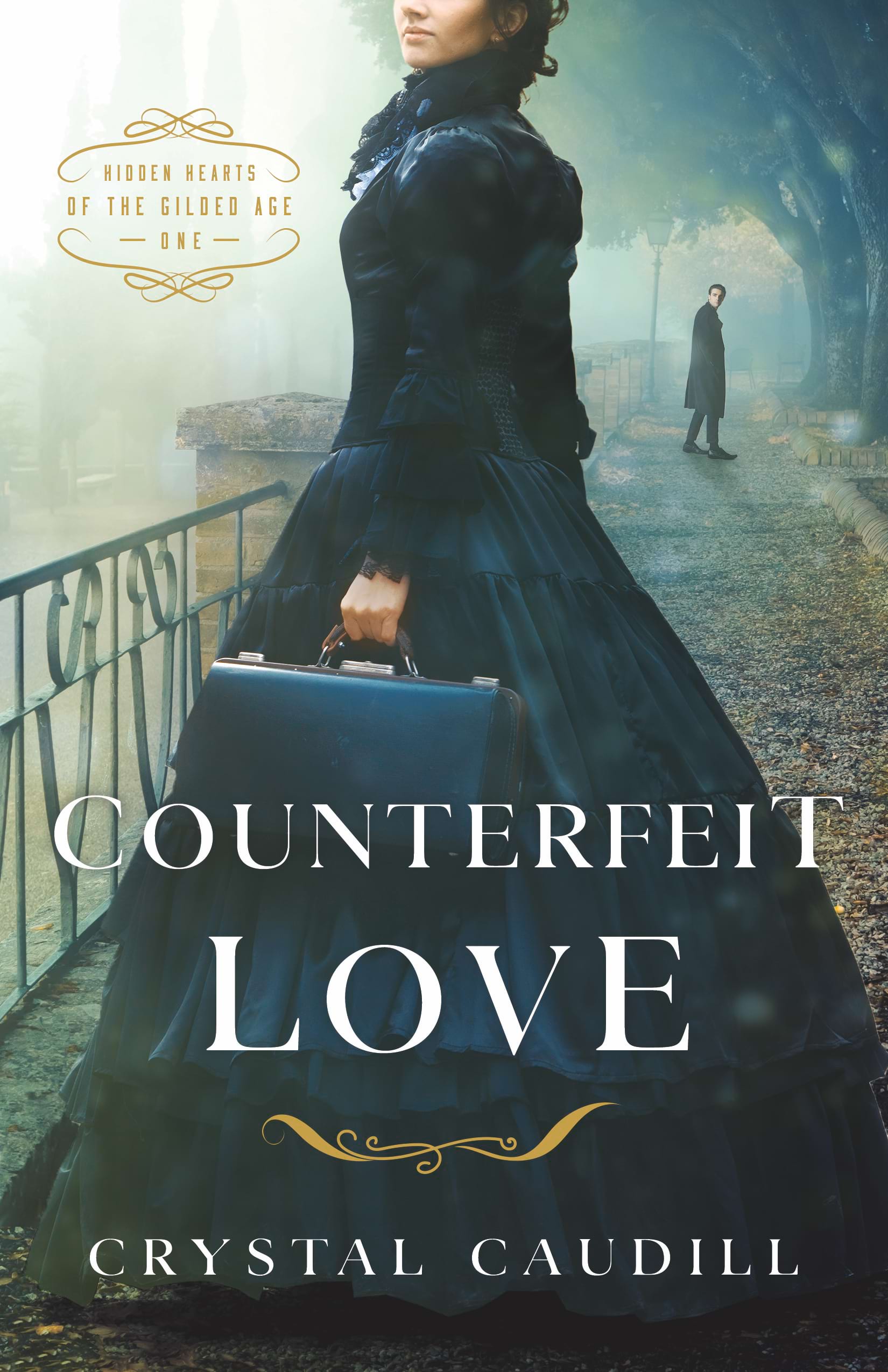
Counterfeit Truth by Crystal Caudill
Counterfeit Love by Crystal Caudill, a Gilded Age romance and mystery
Counterfeit Faith by Crystal Caudill

Resources

While I’m not going to list all the resources I used in research for this story, I will leave you with a few of my favorites in case you want to research further.


Books

Illegal Tender by David R Johnson* (My personal favorite. It gives you a look at counterfeiters AND the Secret Service.)

The United States Secret Service by Walter S. Bowen and Harry Edward Neal

Freedom’s Detective: The Secret Service, the Ku Klux Klan, and the Man Who Masterminded America’s First War on Terror by Charles Lane

True Detective Stories by Andrew L. Drummond (Digital)

 
Excerpts from the History of the United States Secret Service, 1865-1975 by the United States Secret Service (Digital)


Digital Resources


Secret Service Museum Tour (Closed to the Public – video) 
 
The U.S. Secret Service: History and Missions by Shawn Reese Analyst in Emergency Management and Homeland Security Policy


Crystal Caudill, author of Gilded Age historical romance and historical romantic suspense

ABOUT CRYSTAL CAUDILL

Crystal Caudill is the author of “dangerously good historical romance.” Her debut novel, Counterfeit Love, was a 2023 Carol Award finalist, and her novella, “Star of Wonder,” won the 2024 Christy Award for short form. She loves history, hot tea, all things bookish, and the Teenage Mutant Ninja Turtles. She is a stay-at-home mom, caregiver, and chaos organizer. When she isn’t writing, Crystal can be found hanging with her family and playing board games at her home outside Cincinnati, Ohio. Find out more at crystalcaudill.com.

Connect with the author:

Website  |  Newsletter  |  Facebook  |  Facebook Group  |  Instagram  |  Pinterest  |  Amazon  |  BookBub  |  GoodReads

A Question for You:


What was your favorite fact shared today? 

A Brief History of the Secret Service: Part 4: Bringing Criminals to Justice

A Brief History of the Secret Service: Part 4: Bringing Criminals to Justice

A Brief History of the Secret Service

“The detection of crime, when entered upon with an honest purpose to discover the haunts of criminals and protect society from their depredations by bringing them to justice, is held to be an honorable calling and worthy of commendation of all good men.”

– Hiram C. Whitley, Chief of the Secret Service, May 1869 – September 1874


Welcome to my series of blog posts revisiting my research on the Secret Service for my Hidden Hearts of the Gilded Age series. For the next few months, I’ll be posting about their history. At the end of each post, I’ll include my resources and links to the other posts. As each post goes live, the links will be updated.

Part 4: Bringing Criminals to Justice


The Secret Service adopted a long-term strategy for suppressing counterfeiting. While the country was split into 11 districts, covering multiple states and territories, the first step of this plan was to concentrate its operatives in the largest urban centers: New York City, Philadelphia, Cincinnati, and St. Louis.


There, they sought to penetrate the criminal networks by starting at the lowest level and gradually working their way upward to identify and arrest the manufacturers. Informants were crucial to their success, providing information and introductions into these secretive gangs of counterfeiters.


Good cases took weeks, even months, to develop and required enormous amounts of patience and dedication. Although not usually dangerous (the first operative to lose their life on the job was not until 1907), operatives stayed in peak condition to contend with criminals who did not wish to be caught.


Operatives were scrutinized by their superiors and were required to write extensive daily reports. Expenses were itemized, including the purchase of counterfeit notes, travel expenses, and personal expenses. In 1875, Chief Washburn demanded that field operative Andrew Drummond obtain a refund from a Philadelphia telegraph operator who had overcharged him one cent. Ever dutiful, he obtained the refund.


Not only were their expenditures itemized, but their days were also detailed from waking moment until slumber. A typical report might say: “I got up at 5:30 AM, ate my breakfast, left home at 7 AM, arrived at the office at 8 AM, at 8:30 I went to First National Bank…., I returned home at 10 PM and went to bed at 11 PM.”


Though they faced internal and external challenges, through the use of informants, undercover work, and both investigative and instigative techniques, the Secret Service reduced counterfeiting from the most prominent criminal activity in the pre-Civil War United States to a spattering of successful occurrences by 1900.

Fun Fact:

Long before the Miranda Rights were established in 1966, the Secret Service had its own version. It was common practice for law enforcement agencies to grant freedom to criminals who spouted information at their arrests. However, Chief of the Secret Service Elmer Washburn (1874–1876) enacted a policy for the Secret Service which required operatives to inform arrested criminals that anything they did must be done “voluntarily and without any promises whatever.” (See reports by Secret Service operatives as quoted in Illegal Tender by David R. Johnson [1995]). This policy was further emphasized by Chief James Brooks (1876–1888) in 1879. Operatives were instructed to warn suspects of their rights. Everything a suspect said would be documented and used against them in court, and they did not have to answer any questions until they had consulted a lawyer. Nearly ninety years before the rest of law enforcement agencies required it, Secret Service operatives were reading suspects their rights.

Resources

While I’m not going to list all the resources I used in research for this story, I will leave you with a few of my favorites in case you want to research further.


Books

Illegal Tender by David R Johnson* (My personal favorite. It gives you a look at counterfeiters AND the Secret Service.)

The United States Secret Service by Walter S. Bowen and Harry Edward Neal

Freedom’s Detective: The Secret Service, the Ku Klux Klan, and the Man Who Masterminded America’s First War on Terror by Charles Lane

True Detective Stories by Andrew L. Drummond (Digital)

 
Excerpts from the History of the United States Secret Service, 1865-1975 by the United States Secret Service (Digital)


Digital Resources


Secret Service Museum Tour (Closed to the Public – video) 
 
The U.S. Secret Service: History and Missions by Shawn Reese Analyst in Emergency Management and Homeland Security Policy


Check out the Hidden Hearts of the Gilded Age Series

Can these four Secret Service Operatives catch the counterfeiters … without losing their hearts?


A Gilded Age Secret Service historical romance series, with mystery and suspense
Counterfeit Truth by Crystal Caudill
Counterfeit Love by Crystal Caudill, a Gilded Age romance and mystery
Counterfeit Faith by Crystal Caudill
Crystal Caudill, author of Gilded Age historical romance and historical romantic suspense

ABOUT CRYSTAL CAUDILL

Crystal Caudill is the author of “dangerously good historical romance.” Her debut novel, Counterfeit Love, was a 2023 Carol Award finalist, and her novella, “Star of Wonder,” won the 2024 Christy Award for short form. She loves history, hot tea, all things bookish, and the Teenage Mutant Ninja Turtles. She is a stay-at-home mom, caregiver, and chaos organizer. When she isn’t writing, Crystal can be found hanging with her family and playing board games at her home outside Cincinnati, Ohio. Find out more at crystalcaudill.com.

Connect with the author:

Website  |  Newsletter  |  Facebook  |  Facebook Group  |  Instagram  |  Pinterest  |  Amazon  |  BookBub  |  GoodReads

A Question for You:

 

What was your favorite fact shared today? 

Romance Tropes Bracket – August Matchup

Romance Tropes Bracket – August Matchup

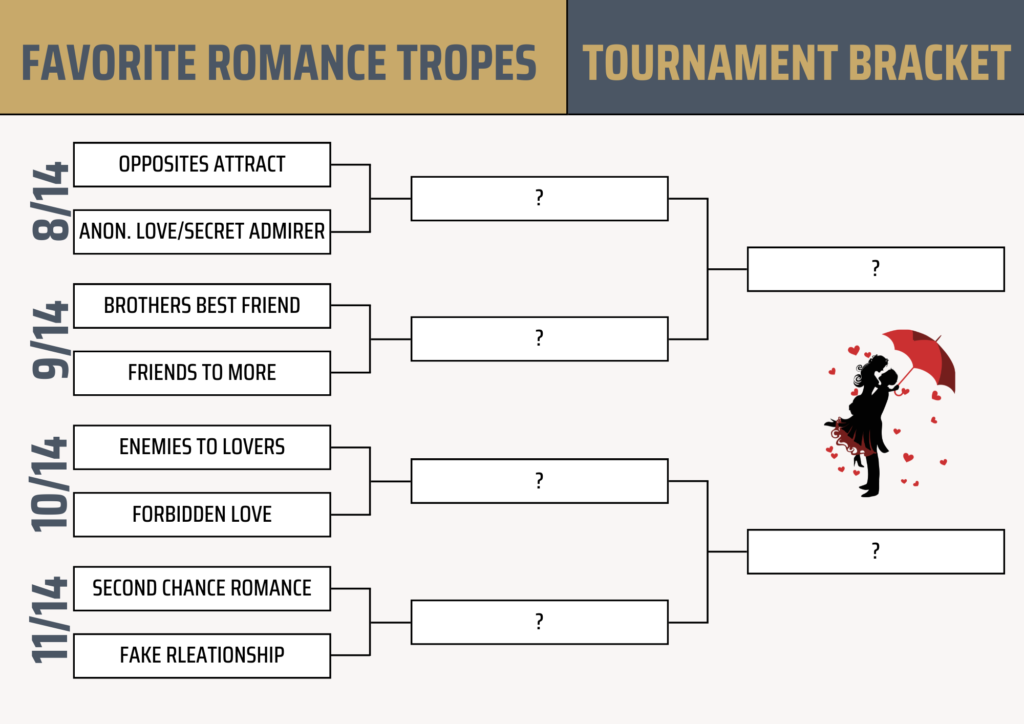
Romance Tropes Tournament Bracket

Welcome to my Romance Trope Bracket Tournament. Once a month, I’m going to post a new matchup.

Comment with YOUR vote for which trope YOU prefer to read.

Then visit the tropes below to see my book recommendations for each trope.

Opposites Attract


The hero and heroine, who are opposites in temperament, personality, or other characteristics, end up falling for one another despite those differences.

Here are four of my favorite opposites-attract stories!

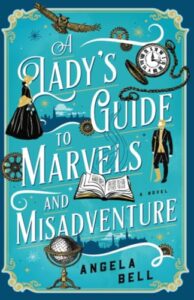
A Lady’s Guide to Marvels and Misadventure by Angela Bell


Beyond These War Torn Lands by Cynthia Roemer

Christmas at Whitefriars by Elizabeth Camden

The Convicts Courtship by KyLee Woodley

Anonymous Love & Secret Admirer


Involves characters who fall in love without knowing each other’s true identities, or a character who has romantic feelings for another person but keeps their identity hidden, often expressing their affection through anonymous gifts or letters.

Here are three of my favorite anonymous love / secret admirer stories.

Letters for Phoebe by Sally Britton


A Secret Correspondence by Kasey Stockton


An Agreeable Alliance by Kasey Stockton

Comment below with YOUR vote for favorite trope!

Pin It on Pinterest