by Crystal Caudill | Aug 25, 2020 | Writing Craft
This month’s “From the Author’s Desk” is a long post about researching for your novel that I wrote for another blog meant to help other writers. I wanted to post it here too, so I could include it in my For Writer’s Tab. I hope you’ll find it an interesting look a the practical side of preparing for a novel.
Research: Love It or Hate It, You Gotta Do It!
Research. You either dread it or love it. Regardless of your sentiment, as a diligent writer, you have to do it and do it right. Whether new at the researching game or old hat, it is my prayer that this post will give you a little bit of guidance, a few resources, and a “whole lotta” inspiration.
I will be tackling this from the historical fiction angle, but anything written here can be applied to any genre’s research needs.
Where do I start researching?
Think of the act of researching as similar to drawing a tornado—you start with wide broad spirals that narrow down to a very focused point the closer you get to the ground, or in this case, your story.
With this in mind, I recommend starting wide and shallow before you ever write the first word of your story. Get a feel for what the politics, economy, culture, major events, fashion, etiquette, industries, technology, and social constructs were like for the setting of your story. These could have potentially content-altering information that can cripple a story if you find out too late.
Honestly, my favorite way to get a broad overview is to find children’s history books on the topics. They often have lots of interesting tidbits while giving you a broad sense of what is going on. It also helps to guide you in to more narrow and deeper research.
Once you have a general understanding of the times, then you can really narrow in on the specifics of your character and situation. Below I’ve listed some topics for consideration and some guiding questions to help you determine what is going to matter most to your character.
Major Topics for Consideration:
Each story is going to have unique needs, so you need to gauge your research based on those needs. If your story isn’t going to have a huge political influence, stop researching politics after you have a general feel for your story’s need. If your story has a rich socialite and a poor man, you are going to need to know the intricacies of upper-class society’s expectations and how they differ from someone who has never experienced it. I think you probably get the idea. 😉
Politics: What major political events were going on during the setting of your story? How might they affect your characters? Most of us don’t live in a bubble, and what is going on in the world filters into our lives and our discussions. Take that into consideration to be sure that there isn’t something that would greatly impact your story’s plot.
For example, if you have your character’s father the owner of a railroad during the railroad strikes, that is going to affect your character in at least some manner. If your heroine lives during the era of growing awareness of women’s rights (a much longer period than you might realize), how will this influence what your character believes, thinks, and says?
Culture: This means looking at the region and locale of your story. What foods, activities, and sayings are common to that area? Are there certain expectations that aren’t included elsewhere? Do they have certain fashions? Are there certain people groups common to that area that would influence the culture of that city?
Cincinnati is heavily German. When I moved here, I experience lots of new-to-me foods, building styles, and a TON of Catholic schools. There were two for the area I’d grown up in. Do your research and you’ll be surprised about what will really add richness to your story.
Economics and Social Status: Different social classes have different expectations and behaviors. How are those going to affect your character? What obstacles will that create? Consider the careers they would be likely to have. What industry do your characters rely on? What is going on in those industries which could affect their lives? The more you know about these things, the stronger your story will be.
When researching my manuscript Counterfeit Love, I discovered there was a “Long Depression” lasting from 1873 to 1896. At the time, they called it the “Great Depression.” What I learned changed and set the baseline for the struggles my heroine faced, even though I never directly connected the two for my reader.
Organizing the Research
As much as I hate to admit it, taking notes which are easy to reference is critical. It is really important to keep a running bibliography so that you can back up your research when questions, and you can reference something if you get confused as you look over your notes.
I use a program called Scrivener, and under the research tab, I create folders. My “big folders” are named by the topic: Setting, Etiquette, Fashion, Gardening, etc. My broad needs are labeled for quick reference.
Inside each folder, I break it down to it’s smaller component topics. My current character is a master gardener, and I am a black thumb, so under my gardening folder I have topics like Master Gardener (which will include examples, requirements, real people, and their gardens which I can reference), Plants Heroine Works With, etc.
Beyond that, each book resource will get its own folder. Each website gets a single text document. I name these text documents and book folders by the name of the resource, and also by the topic if the resource is focused on a single topic. I take my notes in a table format:
|
Page Number
|
Exact Quote
|
Personal Notes/ Observations
|
Possible Plot Points
|
|
1
|
“ABC”
|
It’s the alphabet
|
A letter goes missing
|
It is a bit tedious, but I do find that it has been invaluable in brainstorming, reviewing information, and finding a specific fact quickly.
Each person has their own method, this is just mine, so do not feel like you HAVE to do it my way. Do be sure to keep track of your resources though. You never know when you will have to justify something you wrote.
Conducting Research
When it comes to conducting research, it is easy to get lost in the mire of possibilities. You can visit museums, websites, historical societies, read history books or primary sources, travel, or even search satellite maps.
Most of my research is done from home and online. To find my resources, I usually start with a search of my local library’s catalog or a Google search to find some reputable resources. Yes, I even go to Wikipedia—but only as a starting point to direct me somewhere else. I get what information I can, and then I look at their bibliographies. This is how I narrow down what I am going to read.
I prefer diaries, books, and newspapers written during the era I’m writing. This can be difficult and expensive if I’m not careful. I highly recommend seeing if your public library has a subscription to Historic Newspapers websites. Mine has several. From home, I can read newspapers and search for topics in those newspapers for free. It is marvelous.
For books, there has been a wonderful movement to digitalize old books and most of them are free to read. Below I’ve given you a list of my favorites. You can search by title, year, subject, or even keywords. It has been a lifesaver, especially during these strange times which makes research extra difficult.
While finding books from eh 1880s can be expensive and difficult, there are a lot of books that have been digitalized and can be searched for free. Below, I’ve given you some of my favorites.
Online Resources
https://babel.hathitrust.org/ – This is my favorite resource. It can take some weeding through, and you’d definitely want a specific title, but I have found countless resources here.
https://books.google.com/ – They list them all, whether you can read them or not, so just make sure they say Free E-book when you click on it.
https://archive.org/ – This one has gotten in trouble lately for pirating current books, so make sure you are only looking at books printed before WWI. Generally, I only go to this website once I have a specific title in mind. There are usually multiple copies of the same book and it does take some weeding through.
Search for the historical society of the area you are researching. Some of them have online resources, some will be thrilled to talk to you and help you out, and some will never answer back. Either way, they are a go-to resource for information you would never have imagined.
How to Avoid Rabbit Trails
Oh, the wonderful things you can find when researching! And oh how much time you can waste. What helps me to not waste hours down a rabbit trail (and I still do often), is to keep the specific thing I am researching in mind.
When I come across something else that strikes my fancy but isn’t what I need at that particular moment, I add a note and the website link to a folder I title “Research This Later.” 90% of the time I don’t go back to it, but having it tucked away for later helps me to release the rabbit trail and stay focused.
It’s a simple trick, but it works well. You could also set a timer for how long you are going to research this topic, but I find I turn those off and just keep going.
While writing your actual manuscript, I recommend you do not go and research something the moment you find you need it. Just make a note in your manuscript like this: [RESEARCH FASHION]. The primary concern with drafting is getting the story down as quickly as you can. Research can cause you to lose that momentum.
How do you decide what to use?
Throw all you want or find interesting in your first draft. This is your place to just see where the story takes you. Once you begin the revision process you can decide what needs cut. To make that decision, ask yourself: “What does my read absolutely need to see and understand the story?” and “Does this slow my story down?”
If it is needed AND slows your story down, see if you can change up the presentation of the information. Can it be communicated briefly through fascinating dialogue?
If it isn’t needed, even if it doesn’t slow your story down, you’ll probably need to cut it. You can always leave it and see what beta readers think. However, what I’ve observed in today’s readers is the more concise you can be, the better.
Cutting that beloved material from your first draft can be hard, but you can still use those materials in blog posts, social media posts, and promotional opportunities later on. You already have the content, and readers may find it interesting.
There is really is so much more that could be said about research, but I have surpassed my word count. If you have questions or want to learn more, feel free to contact me.
by Crystal Caudill | Apr 29, 2020 | Writer's Life, Writing Craft
Have you ever wondered about how authors come up with characters? I’m sure every author has their own process, but I can guarantee you, it is similar to making new friends. In the beginning, you don’t really know much about them. Sometimes you’ll have a name, sometimes not. The same goes for descriptions, personalities, jobs, etc. They are just this person that is sort of an enigma, and it takes work to get to know them.
While I struggle to make friends with people existing outside of fiction–I can’t say real people because my fiction characters DO become real to me–I always get very excited when it comes time to meet my newest characters. I thought it might be fun to take you through a little bit of my process as I get to know a character I’m developing for a short story. At this point, I know VERY little about my character. I’ve already brainstormed a few ideas with my critique partner, but Harriet is still very flat on the paper.
What I do know:
Harriet Carmichael is a bit of an outsider to the upper-class society in which her family partakes. She goes beyond avid gardener to more of the botanist level, and she relates better to the plants than people. In fact, most people find her odd even though gardening was a perfectly acceptable hobby for upper-class women of the time.
She is forced to attend the Christmas party of a woman who is skilled at double-edged compliments and making Harriet feel even more insignificant than before. However, while at this party, she receives a note or a gift (not sure which yet) from a secret admirer. No matter how much she wishes it were true, she can’t believe its authenticity. However, something happens (again, don’t know what yet) will send her on a hunt to discover the true identity of the letter writer. Was it another cruel joke of the woman, or had someone really seen her and wanted to get to know her better?
That’s it, that’s all I really know right now, but I’m really excited about writing this brief story. Depending on how it turns out, it may be my Christmas gift to my newsletter subscribers. But I digress…
After attending the Online Character Summit this weekend, I am determined to take some of what I have learned and carve Harriet into a deeper more human character that we can all relate to on some level. So here we go:

Getting to Know Harriet
This portrait by George Clausen is how I physically envision Harriet at the moment. She’s nothing extraordinary, and her clothes are rather dull. She tends to wear browns in order to disguise her constant work in the soil. From here, it becomes sort of an interview process.
Me: So Harriet, who are you? Why do you feel you that you don’t fit in? It can’t just be your love of plants.
Harriet (rubbing hands together and then tucking them behind her when she finds dirt under her nails): I don’t really know much about people, and honestly, I don’t understand them. People are unpredictable. Plants follow certain rules, I know what they need to coax them into vibrancy, which ones to pair together, and which ones to plant in order to entice or repel certain insects or animals. I love being able to create and work within God’s creation. Plants are exactly what they are supposed to be. People? Not so much.
It’s not that I don’t like them, it’s that I don’t know what to make of them. Some are genuinely who they appear to be, others opposite from what they present to the world. I have a few friends, but mostly, I am uncomfortable around people. I don’t know what to say. I don’t enjoy the same things as my peers.
I like books about gardening, plant life, and even scientific articles about altering plants to be more sturdy against the elements. Miss Austen, Mr. Dickens, and the such leave me baffled. I can play cards, play piano, and embroider as required, but why would anyone want to do those when you can be outside? In fact, I hate winter. I spend most of it planning my next garden or tinkering in the greenhouse/conservatory. The best days are the days I can go to the university and work in the botany department (need to check that was a thing then).
Oh, thought! Have her compare different people/personalities to different types of plants!
And so it will go for a few days. Harriet and I will be having some deep conversations and some lighter-hearted ones. What are the things she likes? The things she fears? What does she want more than anything? What does she believe about herself? What does she need to learn? etc. These are hard questions to draw out, but I love the excitement of it.
Just so you don’t think Harriet is fully developed before I put words on paper, this initial examination is rarely what she ends up looking like as I actually write. Harriet will grow and define herself, shedding some of the things I thought we decided in the beginning. She will develop her own voice and become a real person. Even scarier, she will start making her own decisions and direct my story in ways I never envisioned.
I hope you enjoyed a little sneak peek of my process in developing characters, now I really am going to get off here and dive into uninterrupted conversation with Harriet. I’m starting to get caught up on reading, so look for more steady book reviews in the coming months. 🙂
Do you like gardening? What things do you think Harriet will need in order to rightly portray someone who loves plants, maybe even more than people?
by Crystal Caudill | Apr 1, 2020 | Counterfeit Love, Writer's Life
Welcome to the end of a crazy month (so crazy, I’m a day late on this post) with the prospect of one more left to go. It’s wild how much our world can change within a matter of weeks. I pray you are staying home, staying healthy, and if you are one of those essential workers getting out every day to serve the rest of us, THANK YOU SO MUCH. My prayers are with you no matter where you may be working.
I am back at editing my Secret Service story, so to shake things up a bit, I thought I’d share the inspiration for each of my Secret Service heroes.
Meet the Heroes of Counterfeit Love
Broderick Cosgrove
Broderick works as an undercover Secret Service operative during the early 1880s. He is focused, loves puzzles, and sees his service to country as primary in his life. He pursues justice and truth with care so that no innocent person comes to harm and all who are guilty face a punishment befitting their crime.
His goal in Counterfeit Love: Ferret out the leaders of an elusive counterfeiting gang before they can get the new counterfeit twenties into circulation and damage an already fragile economy.
The Challenge: His former fiancée has somehow become entangled with the gang. She is innocent, but how can he prove it and protect her while doing his job?
The real inspiration behind the character:
Andrew L. Drummond, Chief of the Secret Service between February 1891 and January 1894 – The initial inspiration for this story came from his book True Detective Stories. One of my favorite stories is where he was “arrested” and escaped jail with a counterfeiter in order to build the trust of an elusive gang. Where did his escapades lead him, but Cincinnati? The location of my story.
Andrew Darlington
While Andrew Darlington may not seem the hero type, he is a man trying to overcome a secret past which could cost him his job as a Secret Service operative. Therefore, he strikes every case with a vengeance. Collateral damage don’t matter so long as the criminal is brought to justice and put behind bars.
His Goal in Counterfeit Love: Prove Theresa Plane is the real mastermind behind the elusive counterfeiting ring. No one knows better than him how corrupted and devilish a woman’s soul can be.
The Challenge: Broderick Cosgrove has been swindled by the woman and now he must work around a fellow operative to bring the truth to light.
The real inspiration behind the character:
William P. Wood, Chief of the Secret Service from January 1863 to May 1869
Chief Wood earned a reputation for rash aggressiveness. In the book Illegal Tender, David R. Johnson described Chief Wood as “prowl[ing] the boundaries between legitimate and deviant society” and “lacking scruples and good judgment.” This was the basis for my backstory for Darlington. He is a complex character which you only scratch the surface of in Counterfeit Love.
Josiah Isaacs
Poor Josiah Isaacs is an accidental play boy. He can’t help it that women take his friendliness to be flirtation, and bless his soul, he’s incapable of purposely breaking a woman’s heart. He’s been cornered into a proposal multiple times, and uses cases which take him away from home to convince the women he’s not a good for them so they break it off. He’s smart, caring, and understands Broderick’s position, but duty to their job must have the final say in the case.
His goal in Counterfeit Love: Allow Broderick–his partner and friend–the support and space he needs to prove whether or not Theresa Plane is guilty, but stand firm in revealing the truth should evidence prove otherwise.
The Challenge: Withholding information from their superiors could cost their job, and when the evidence continues to point toward Theresa Plane’s guilt, his friendship with Broderick becomes strained.
The real inspiration for the character:
There isn’t one particular Secret Service operative who stuck out to me to inspire Isaacs. He is sort of a meshing of many operative stories and characters. For me, I wanted a character who would play off the others and be fun to develop, and what more fun can I have than with a man who doesn’t mean to flirt and keeps getting engaged even when he never wants to marry? The story I have planned for him will be so much fun!
by Crystal Caudill | Oct 18, 2017 | Writing Craft

“It is a truth universally acknowledged, that a person in possession of voices in their head, must be an author.”
Okay, so not the most eloquent remastering of the Pride and Prejudice quote, but a truth all the same. Only for authors is it socially acceptable to be insane. If anyone else talked about hearing voices in their head it would be a one-way ticket to the asylum. But voices we hear – the voices of our characters.

A couple months ago, I talked about developing our “Author Voice”, but sometimes what I find even more challenging is developing unique character voice. Someone once told me that each character must have a voice so unique you can read a line or two without an identifier and still be able to determine whose POV it is or who is talking.
Am I the only one that cringed and wanted to hide their manuscript?
Over the last few months, I have developed a few tricks to help me create these unique voices, especially in my character POVs.
Character Voice Hints
1. When writing in a certain POV, I try to sink into what is called Deep Point of View. Essentially it is writing like the entire scene is happening through the thoughts of the character without actually being thought dialogue.
Example:
Instead of: She touched his forehead to check for fever.
Try: Burning heat suffused the air between her palm and his forehead. Oh no. The fever had returned.
2. Give certain frames of references to each character.
Example:
My heroine grew up under the guidance of her military grandfather, who treated her just like a soldier. When writing in her POV, I use military terms, descriptions that line up with military thinking, and actions that reveal her military upbringing.

“His words cannonballed into the soft soil of her soul, crushing it beneath their weight and force.”
My hero, however, does not have this upbringing, but he is a Secret Service operative. So I have him behave, think, and speak like one.
“Edward beat him to the corner seat that gave a clear view of the room. Only criminals and lawmen worried about protecting their backs while observing others.”
Please note, these are unpolished sentences, but they are just to give you an idea of how to work that in.
3. Give them unique phrases and quirks.
Example:
The heroine may say “Oh skunk!” when she is upset, while the hero may rub at a hidden rock in his pocket.
4. Take into account their education level.
If the heroine has had a lot of education, then her word choices should reflect it, but if she is a self-taught woman her choices may be different.
Example:
“The sunset is absolutely exquisite tonight.” vs “It sure is a pretty sunset tonight.”
5. Consider Dialect
Each region has its own turn of phrase and accents. In July, my family and I went on a mission trip and one of the leaders was from Minnesota. Her “o” sounds were unique as well as her use of “You betcha” and “Oofta sakes.” If your characters are from different regions or ethnic backgrounds, take that into consideration.

Example:
One of my villain’s henchmen is Irish. I did a little research and made sure I wrote the dialect correctly and even worked in some sayings into the conversation.
“May the cat eat ye, and the devil eat the cat!” (My personal favorite.)
Your Turn
How do you help the voices of your characters to stand out as unique? Are there certain resources you use to help? If you are comfortable, share a couple examples of your character voices.
by Crystal Caudill | Aug 23, 2017 | Writing Craft

Voice seems to be one of those elusive things I have encountered as an aspiring author. What is it? How do you know what your voice is? How do you know if it is unique? Until recently, I just avoided the whole issue because it seemed so convoluted.
But the day must come when we chase down that elusive concept in order to fully develop into who we are. So here it is, wrong or right, my own view and explanation of voice.
Author Voice:
An author’s voice is not one tangible element in a novel, it is the culmination of all the flavors an author brings to their writing. From genre choice, to settings, typical characters, humor, to even word choice – it all goes to develop a unique voice.
Take a look at this picture:
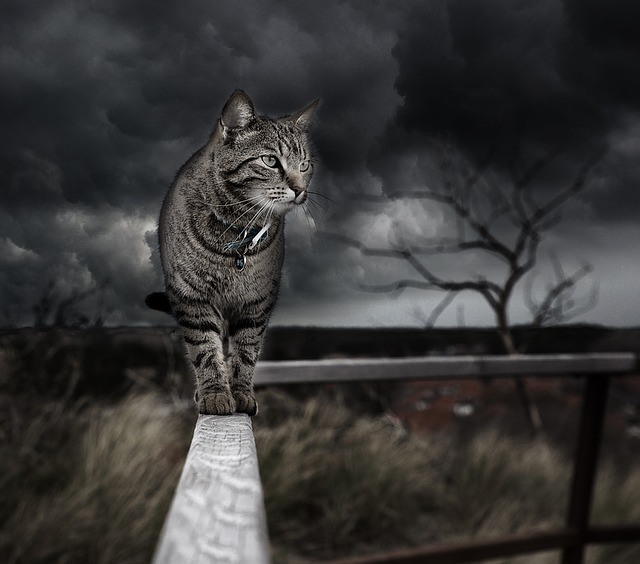
What story comes to your mind?
My first thought was a woman lying in bed, fumbling for a shoe to throw at the cat that never stops meowing out her window. Typical image? Yes, but give me time and I will develop it into a storyline that is unique. What if she killed the cat by accident? And what if it was her neighbor’s prize winner? Or even better, there was a note attached to it revealing a danger no one could have foreseen. Oh, so many ideas are skittering through my mind…
Maybe your first thought was a mystery, a ghost story, or something altogether different. Your author voice can change depending on your genre choice, and most of us tend to pick a particular genre and stick to it.
Three Examples:
 Mary Connealy has a voice I love. She has humor focused on the cowboy days of the west. Her females are almost always strong, independent women with quirky ways. Her characters are always unique and at odds with each other. Whenever I pick up one of her books I know there will be an element of danger, sweet romance, a splash of humor, a cowboy setting, and characters that make me smile.

Jen Turano is another author with a unique voice. Whenever I pick up one of her books, I know they are going to take place in a city setting, with characters who are oddball in some way, danger will ensue, and hilarity prevails. When I need a good laugh, I turn to her or Karen Witemeyer.
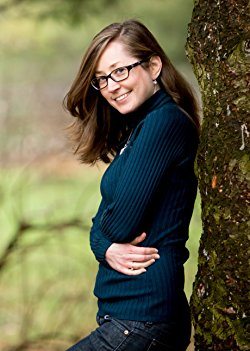
My friend and critique partner, Joanna Davidson Politano, will be releasing her debut novel in October. While I won’t share details of her story now (you will have to wait until next month) Joanna has a voice that makes me swoon. Whenever I read her submissions, I know I will step into a Regency world clouded with mystery. Her books read like a mix of Bronte, Daphne Du Maurier, and Dickens. To read her work is to float through a world that entrances and intrigues, and I absolutely cannot wait for you to read her books!(Okay, swooning over.)
Bottom line, your voice is what a reader can expect to find when they pick up your book.
Finding Your Voice
Evaluate your writing. Do you notice certain trends? Are your stories dialogue heavy? Witty? Detail oriented? Do you add humor to your work? A little? A lot? Do you have odd ball characters? Do you choose a particular type of hero?
What settings do you tend to choose? Cities, the country, a particular region? Are they darker, brighter? Winter, Summer, Autumn, Spring? That can change with each book, but if you notice a particular trend, that just may be part of your voice.
Is your writing very formulaic or is it organic? Susie May Warren is very formulaic in her writing. She works in twenty chapter patterns and has a plan of what has to happen in each segment of her story. For others, there is no discernable pattern beyond the standard three-act plot.

By evaluating your writing, you can determine your strengths and weaknesses, elements that you want to refine and improve upon, maybe even elements you want to weed out of your writing altogether.
My voice is still developing, but I have decided that my voice includes a few elements: Danger and murder plots, women who are independent but get into lots of trouble, heroes who generally fall into the law enforcement category, clear villains, a splash of humor (although nowhere near the amount I thought I would have), and broken families. Forgiveness, redemption, and family are strong threads in what my stories encompass. Do I have a lot of work left? You betcha! Is my voice completely clear and finished? Nope, but I am working on it.
Now it is your turn to share. Comment below.
What do you want a reader to expect when they pick up your books? Have you discovered your own voice? Do you agree or disagree with my view of author voice? What would you add to this?