by Crystal Caudill | Apr 29, 2020 | Writing Craft
Have you ever wondered about how authors come up with characters? I’m sure every author has their own process, but I can guarantee you, it is similar to making new friends. In the beginning, you don’t really know much about them. Sometimes you’ll have a name, sometimes not. The same goes for descriptions, personalities, jobs, etc. They are just this person that is sort of an enigma, and it takes work to get to know them.
While I struggle to make friends with people existing outside of fiction–I can’t say real people because my fiction characters DO become real to me–I always get very excited when it comes time to meet my newest characters. I thought it might be fun to take you through a little bit of my process as I get to know a character I’m developing for a short story. At this point, I know VERY little about my character. I’ve already brainstormed a few ideas with my critique partner, but Harriet is still very flat on the paper.
What I do know:
Harriet Carmichael is a bit of an outsider to the upper-class society in which her family partakes. She goes beyond avid gardener to more of the botanist level, and she relates better to the plants than people. In fact, most people find her odd even though gardening was a perfectly acceptable hobby for upper-class women of the time.
She is forced to attend the Christmas party of a woman who is skilled at double-edged compliments and making Harriet feel even more insignificant than before. However, while at this party, she receives a note or a gift (not sure which yet) from a secret admirer. No matter how much she wishes it were true, she can’t believe its authenticity. However, something happens (again, don’t know what yet) will send her on a hunt to discover the true identity of the letter writer. Was it another cruel joke of the woman, or had someone really seen her and wanted to get to know her better?
That’s it, that’s all I really know right now, but I’m really excited about writing this brief story. Depending on how it turns out, it may be my Christmas gift to my newsletter subscribers. But I digress…
After attending the Online Character Summit this weekend, I am determined to take some of what I have learned and carve Harriet into a deeper more human character that we can all relate to on some level. So here we go:

Getting to Know Harriet
This portrait by George Clausen is how I physically envision Harriet at the moment. She’s nothing extraordinary, and her clothes are rather dull. She tends to wear browns in order to disguise her constant work in the soil. From here, it becomes sort of an interview process.
Me: So Harriet, who are you? Why do you feel you that you don’t fit in? It can’t just be your love of plants.
Harriet (rubbing hands together and then tucking them behind her when she finds dirt under her nails): I don’t really know much about people, and honestly, I don’t understand them. People are unpredictable. Plants follow certain rules, I know what they need to coax them into vibrancy, which ones to pair together, and which ones to plant in order to entice or repel certain insects or animals. I love being able to create and work within God’s creation. Plants are exactly what they are supposed to be. People? Not so much.
It’s not that I don’t like them, it’s that I don’t know what to make of them. Some are genuinely who they appear to be, others opposite from what they present to the world. I have a few friends, but mostly, I am uncomfortable around people. I don’t know what to say. I don’t enjoy the same things as my peers.
I like books about gardening, plant life, and even scientific articles about altering plants to be more sturdy against the elements. Miss Austen, Mr. Dickens, and the such leave me baffled. I can play cards, play piano, and embroider as required, but why would anyone want to do those when you can be outside? In fact, I hate winter. I spend most of it planning my next garden or tinkering in the greenhouse/conservatory. The best days are the days I can go to the university and work in the botany department (need to check that was a thing then).
Oh, thought! Have her compare different people/personalities to different types of plants!
And so it will go for a few days. Harriet and I will be having some deep conversations and some lighter-hearted ones. What are the things she likes? The things she fears? What does she want more than anything? What does she believe about herself? What does she need to learn? etc. These are hard questions to draw out, but I love the excitement of it.
Just so you don’t think Harriet is fully developed before I put words on paper, this initial examination is rarely what she ends up looking like as I actually write. Harriet will grow and define herself, shedding some of the things I thought we decided in the beginning. She will develop her own voice and become a real person. Even scarier, she will start making her own decisions and direct my story in ways I never envisioned.
I hope you enjoyed a little sneak peek of my process in developing characters, now I really am going to get off here and dive into uninterrupted conversation with Harriet. I’m starting to get caught up on reading, so look for more steady book reviews in the coming months. 🙂
Do you like gardening? What things do you think Harriet will need in order to rightly portray someone who loves plants, maybe even more than people?
by Crystal Caudill | Oct 18, 2017 | Writing Craft

“It is a truth universally acknowledged, that a person in possession of voices in their head, must be an author.”
Okay, so not the most eloquent remastering of the Pride and Prejudice quote, but a truth all the same. Only for authors is it socially acceptable to be insane. If anyone else talked about hearing voices in their head it would be a one-way ticket to the asylum. But voices we hear – the voices of our characters.

A couple months ago, I talked about developing our “Author Voice”, but sometimes what I find even more challenging is developing unique character voice. Someone once told me that each character must have a voice so unique you can read a line or two without an identifier and still be able to determine whose POV it is or who is talking.
Am I the only one that cringed and wanted to hide their manuscript?
Over the last few months, I have developed a few tricks to help me create these unique voices, especially in my character POVs.
Character Voice Hints
1. When writing in a certain POV, I try to sink into what is called Deep Point of View. Essentially it is writing like the entire scene is happening through the thoughts of the character without actually being thought dialogue.
Example:
Instead of: She touched his forehead to check for fever.
Try: Burning heat suffused the air between her palm and his forehead. Oh no. The fever had returned.
2. Give certain frames of references to each character.
Example:
My heroine grew up under the guidance of her military grandfather, who treated her just like a soldier. When writing in her POV, I use military terms, descriptions that line up with military thinking, and actions that reveal her military upbringing.

“His words cannonballed into the soft soil of her soul, crushing it beneath their weight and force.”
My hero, however, does not have this upbringing, but he is a Secret Service operative. So I have him behave, think, and speak like one.
“Edward beat him to the corner seat that gave a clear view of the room. Only criminals and lawmen worried about protecting their backs while observing others.”
Please note, these are unpolished sentences, but they are just to give you an idea of how to work that in.
3. Give them unique phrases and quirks.
Example:
The heroine may say “Oh skunk!” when she is upset, while the hero may rub at a hidden rock in his pocket.
4. Take into account their education level.
If the heroine has had a lot of education, then her word choices should reflect it, but if she is a self-taught woman her choices may be different.
Example:
“The sunset is absolutely exquisite tonight.” vs “It sure is a pretty sunset tonight.”
5. Consider Dialect
Each region has its own turn of phrase and accents. In July, my family and I went on a mission trip and one of the leaders was from Minnesota. Her “o” sounds were unique as well as her use of “You betcha” and “Oofta sakes.” If your characters are from different regions or ethnic backgrounds, take that into consideration.

Example:
One of my villain’s henchmen is Irish. I did a little research and made sure I wrote the dialect correctly and even worked in some sayings into the conversation.
“May the cat eat ye, and the devil eat the cat!” (My personal favorite.)
Your Turn
How do you help the voices of your characters to stand out as unique? Are there certain resources you use to help? If you are comfortable, share a couple examples of your character voices.
by Crystal Caudill | Aug 23, 2017 | Writing Craft

Voice seems to be one of those elusive things I have encountered as an aspiring author. What is it? How do you know what your voice is? How do you know if it is unique? Until recently, I just avoided the whole issue because it seemed so convoluted.
But the day must come when we chase down that elusive concept in order to fully develop into who we are. So here it is, wrong or right, my own view and explanation of voice.
Author Voice:
An author’s voice is not one tangible element in a novel, it is the culmination of all the flavors an author brings to their writing. From genre choice, to settings, typical characters, humor, to even word choice – it all goes to develop a unique voice.
Take a look at this picture:
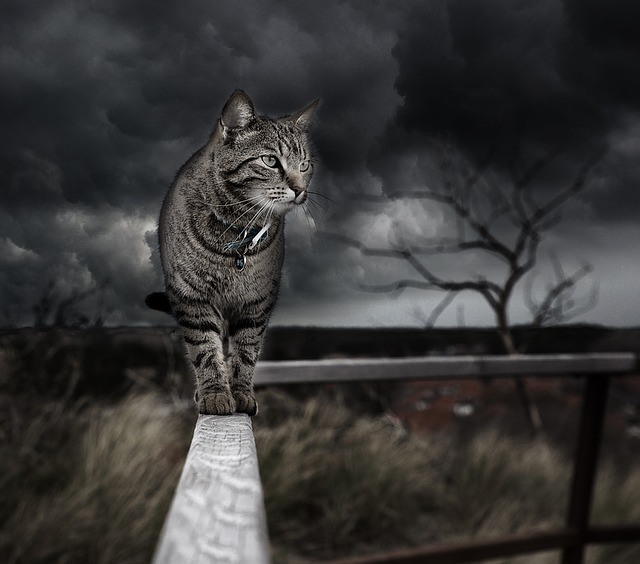
What story comes to your mind?
My first thought was a woman lying in bed, fumbling for a shoe to throw at the cat that never stops meowing out her window. Typical image? Yes, but give me time and I will develop it into a storyline that is unique. What if she killed the cat by accident? And what if it was her neighbor’s prize winner? Or even better, there was a note attached to it revealing a danger no one could have foreseen. Oh, so many ideas are skittering through my mind…
Maybe your first thought was a mystery, a ghost story, or something altogether different. Your author voice can change depending on your genre choice, and most of us tend to pick a particular genre and stick to it.
Three Examples:
 Mary Connealy has a voice I love. She has humor focused on the cowboy days of the west. Her females are almost always strong, independent women with quirky ways. Her characters are always unique and at odds with each other. Whenever I pick up one of her books I know there will be an element of danger, sweet romance, a splash of humor, a cowboy setting, and characters that make me smile.

Jen Turano is another author with a unique voice. Whenever I pick up one of her books, I know they are going to take place in a city setting, with characters who are oddball in some way, danger will ensue, and hilarity prevails. When I need a good laugh, I turn to her or Karen Witemeyer.
My friend and critique partner, Joanna Davidson Politano, will be releasing her debut novel in October. While I won’t share details of her story now (you will have to wait until next month) Joanna has a voice that makes me swoon. Whenever I read her submissions, I know I will step into a Regency world clouded with mystery. Her books read like a mix of Bronte, Daphne Du Maurier, and Dickens. To read her work is to float through a world that entrances and intrigues, and I absolutely cannot wait for you to read her books!(Okay, swooning over.)
Bottom line, your voice is what a reader can expect to find when they pick up your book.
Finding Your Voice
Evaluate your writing. Do you notice certain trends? Are your stories dialogue heavy? Witty? Detail oriented? Do you add humor to your work? A little? A lot? Do you have odd ball characters? Do you choose a particular type of hero?
What settings do you tend to choose? Cities, the country, a particular region? Are they darker, brighter? Winter, Summer, Autumn, Spring? That can change with each book, but if you notice a particular trend, that just may be part of your voice.
Is your writing very formulaic or is it organic? Susie May Warren is very formulaic in her writing. She works in twenty chapter patterns and has a plan of what has to happen in each segment of her story. For others, there is no discernable pattern beyond the standard three-act plot.

By evaluating your writing, you can determine your strengths and weaknesses, elements that you want to refine and improve upon, maybe even elements you want to weed out of your writing altogether.
My voice is still developing, but I have decided that my voice includes a few elements: Danger and murder plots, women who are independent but get into lots of trouble, heroes who generally fall into the law enforcement category, clear villains, a splash of humor (although nowhere near the amount I thought I would have), and broken families. Forgiveness, redemption, and family are strong threads in what my stories encompass. Do I have a lot of work left? You betcha! Is my voice completely clear and finished? Nope, but I am working on it.
Now it is your turn to share. Comment below.
What do you want a reader to expect when they pick up your books? Have you discovered your own voice? Do you agree or disagree with my view of author voice? What would you add to this?
by Crystal Caudill | Mar 15, 2017 | Writing Craft
Characters are more than just the sum of their actions. In the previous weeks, I discussed character archetypes and negative/positive personality traits, but all of these really just boil down to actions. So what more do you need to create a living, breathing, well-rounded character?
 To give your characters the breath of life, you need to give them a past full of good and bad experiences, even though their full back story will never be revealed to the reader. Susie May Warren does a fantastic job of explaining how she does this in her book The Story Equation (SEQ), and I highly recommend getting it. For the meantime, here is the basic process derived from her SEQ.
Developing Character History
Your character is who they are when they walk on the page due to their histories. As an author, it would be impossible create a comprehensive life story for your character from birth to the time they walk on the page. Many of those details are not important.
 The important details of our lives are those life-altering parts. Those moments in time that end up wounding you, burying a lie deep into your heart, and creating fears. Susie May Warren calls these Dark Moment Stories.
Dark Moment Stories
These dark moment stories aren’t as vague as “my parents divorced.” As bad as divorce is, moments within the divorce will be what really shaped the experience of your character. They are the stories that can be retold in detail to another character.
For example, take a story of a four-year-old boy whose father walked out on him. That memory is so painful, so poignant it becomes immortalized in the mind, twisting and growing roots down to the soul.
He can remember his Dad loading up the car, ignoring the son as he followed behind asking questions.
“Daddy, where are you going?”
“Can I go, Daddy?”
“Why is Mommy crying?”
“Can I help?”
Then it happened. Dad closed the door, separating the boy from him forever. The boy runs to the window and watches as the car putters off into the distance without one backward glance from the driver.
Imagine the wound developed by that. What fears would develop from that experience? The fear of abandonment. The fear of being unworthy. The fear of being out of control.
Lies will develop from this experience. I’ll never be good enough. I am unlovable. I can’t trust people. People I love will always end up leaving.
These lies and fears developed from the wound determine the actions of our characters and make them believable. The wounding story is what makes us sympathize the character and even connect with the character. You don’t have to have your father abandon you to understand the feeling of abandonment.

Bringing your characters to life means giving them experiences that readers can connect to and identify with. Give them experiences that define who they are at the beginning, but are overcome and redefined at the end.
Exercise Your Brain
This week, come up with your own dark moment story for a character (or use a real experience, we’ll never know!). Then tell us the possible lies and fears developed from that dark moment story. Come back and encourage one another and comment on the different stories.
by Crystal Caudill | Mar 1, 2017 | Writing Craft

What draws you into a book? Is it the thrilling plot? The sizzling romance? The comical situations?
Or is it something more?
I am willing to bet that the reason you love your favorite book is not because of the plot but because of the characters that move through the plot.
As a writer, it is absolutely crucial to create characters that are well-rounded and real. So just exactly how is this done?
Creating Real People
 A couple weeks ago I discussed the idea of using archetypes to develop a general idea of your character’s profile. While the universal elements of archetype may draw a reader initially to a character, there must be something more than just kiddie pool depth for your characters to become favorites. They must be real.
Real people have good qualities and bad qualities, or flaws as they are often referred to in the writing world. We see these traits in people through their actions. You don’t hear people going around announcing “I’m cynical” or “I’m adaptable” to the world (usually), and even if they did, you wouldn’t believe them until you saw it through their actions.
I can say I’m a morning person all I want, but until you see me actually  willingly getting my butt out of bed before 9 AM and happy about it, you might doubt it. By the way, if you haven’t guessed, mornings and I are not on speaking terms.
Thus, as a writer, it is critical to determine the personality traits of your characters, both good and bad, and determine ways to show this subtly through their actions.
Positive and Negative Traits
If you are like me, at the beginning, I struggled with deciding what are personality traits and the behaviors that go with my characters. Enter one of my favorite writing resources, Angela Ackerman’s and Becca Puglist’s Positive and Negative Trait Thesaurusus (or thesauri, depending on your grammar philosophy).
Each thesaurus includes a definition, category (they have a whole intro section on this), similar attributes, possible causes, associated behaviors, associated thoughts, associated emotions, positive aspects, negative aspects, examples in literature and film, traits in supporting characters that may cause conflict, challenging scenarios, and even how a negative trait can become overcome.
Whenever I create my hero, heroine, and even my “villain”, I am sure to pick out 3 – 4 positive and negative traits each to help define my character. Sometimes the traits are a major part of their character, and sometimes the traits are just one of those little quirks that people have.
Determining How a Character Behaves
After I have listed out their traits, I also list out the associated behaviors I can see my character doing. Sometimes I begin to see a pattern of behaviors that are repeated across traits and I realize these behaviors need to be something highly visual in my storyline. For quick reference sake, I “distill” my characters down to a few, easy to reference traits and behaviors to post onto my bulletin board.
Here is my heroine’s “distilled” list:
Values: Security, Loyalty, Honesty
- Holds on to goals long after prudent

- Unparalleled sense of morality
- fight for what is right no matter what
- Ferocious Loyalty
- Not letting others help
- Determined
- Refusing to admit defeat
- Acting without thinking of the consequences (courageous, impulsive)
- Spontaneous
- Acting in response to emotions (this and the next behavior cause inner conflict at times)
- Firm control of emotions
- Light manipulation to keep attention away from self
- Honest
- Thinks in metaphors
- Growing quiet, lost in thought
- Adventurous
- Creative problem solving
It might still need a little fine tuning, but I use it as a general list as I work through my story.
What about you? How do you determine what traits your character has? What traits do you admire in heroes or heroines?
You’ve learned part of my process above, but the traits I love most in my hero and heroines are quick wit, loyal, independent, and strong senses of justice. This is perhaps why most of the stories in my head center around some of those themes.
Come back in a couple weeks when I talk about Creating Well-Rounded Characters – Giving Them Life on 3/15/17.
Previous Post: Creating Well-Rounded Characters – Archetypes
by Crystal Caudill | Feb 15, 2017 | Writing Craft
Developing a well-rounded character takes time and purpose. I tend to be a panster (a writer who writes by the seat of their pants), but I have learned to develop my characters thoroughly before beginning to write.

Many authors do a character interview to help get to know their characters. I am slowly learning to do that using Susan May Warren’s SEQ technique (check out her book about it here), but I have also added my own twist to discovering the inner workings of my characters.
So what are those key components to take into consideration when developing a character?
In addition to SEQ, I like to explore my characters archetypes, positive personality traits, negative personality traits, and character backstory. Today I just want to focus on archetypes.
What are Archetypes?
Archetypes are just universal patterns of behavior that have positive and negative aspects.
Caroline Myss, “a pioneer in the field of energy medicine and consciousness”, suggests each person has a combination of about 12 archetypes that make up their psyche, each having varying degrees of presence in your life depending on your situation. I don’t get into all that “new age” feel stuff, but her collection of 72 Archetypes Cards are very useful in developing fictional characters.
Some examples of her archetypes are:
- Artist
- Child – Orphan
- Child – Wounded
- Detective
- Judge
- Knight
- Networker
- Prostitute
- Warrior
Developing Character Archetypes
For my characters, I choose between four and six archetypes that define who they are during my story. In fact, the list above is the archetypes I chose for my hero and heroine in my WIP.
Each archetype has positive and negative traits. Because the prostitute archetype might be a little concerning to you, I will share that one as my example.

“The Prostitute archetype engages lessons in the sale or negotiation of one’s integrity or spirit due to fears of physical survival or for financial gain. We prostitute ourselves when we sell our bodies or minds for money, or when we compromise our morals and ethics for financial gain… The core learning of the Prostitute is that self-esteem and self-respect make you impervious to selling out.”
– “Prostitute”, Caroline Myss Archetype Cards Booklet
Caroline Myss adds more, but as you can see from this description that “Prostitute” is not exactly what you first think. No, my heroine is NOT sexually immoral or active. What she does do is compromise her morals due to her fears of physical survival.
Have you ever compromised your morals due to self-preservation? It doesn’t have to be big and earth-shaking. It could be the one time you blamed your toddler sibling for eating all the cookies before dinner, even though you believe lying is wrong. See how the archetype can be used for everyday situations?
 Picking out four to six archetype cards really helps to round out your characters and make them multi-dimensional. The general strengths and weaknesses are outlined for you to expand upon and fine-tune for the uses of your own story. Characters can even have overlapping archetypes, yet be completely their own person, just like the human race in real life.
Because archetypes are universal in nature, readers will connect to your characters because they see aspects of themselves within the story.
When developing your own characters, I highly recommend taking into consideration their archetypes. If you struggle with archetypes, I suggest picking up Caroline Myss’ Archetype Cards.
What other archetypes are you familiar with? Still confused? Leave a question below. I promise to get back to it as soon as I can.
Do you have any resources you use to help develop your own characters?